Leroy Makes It Happen

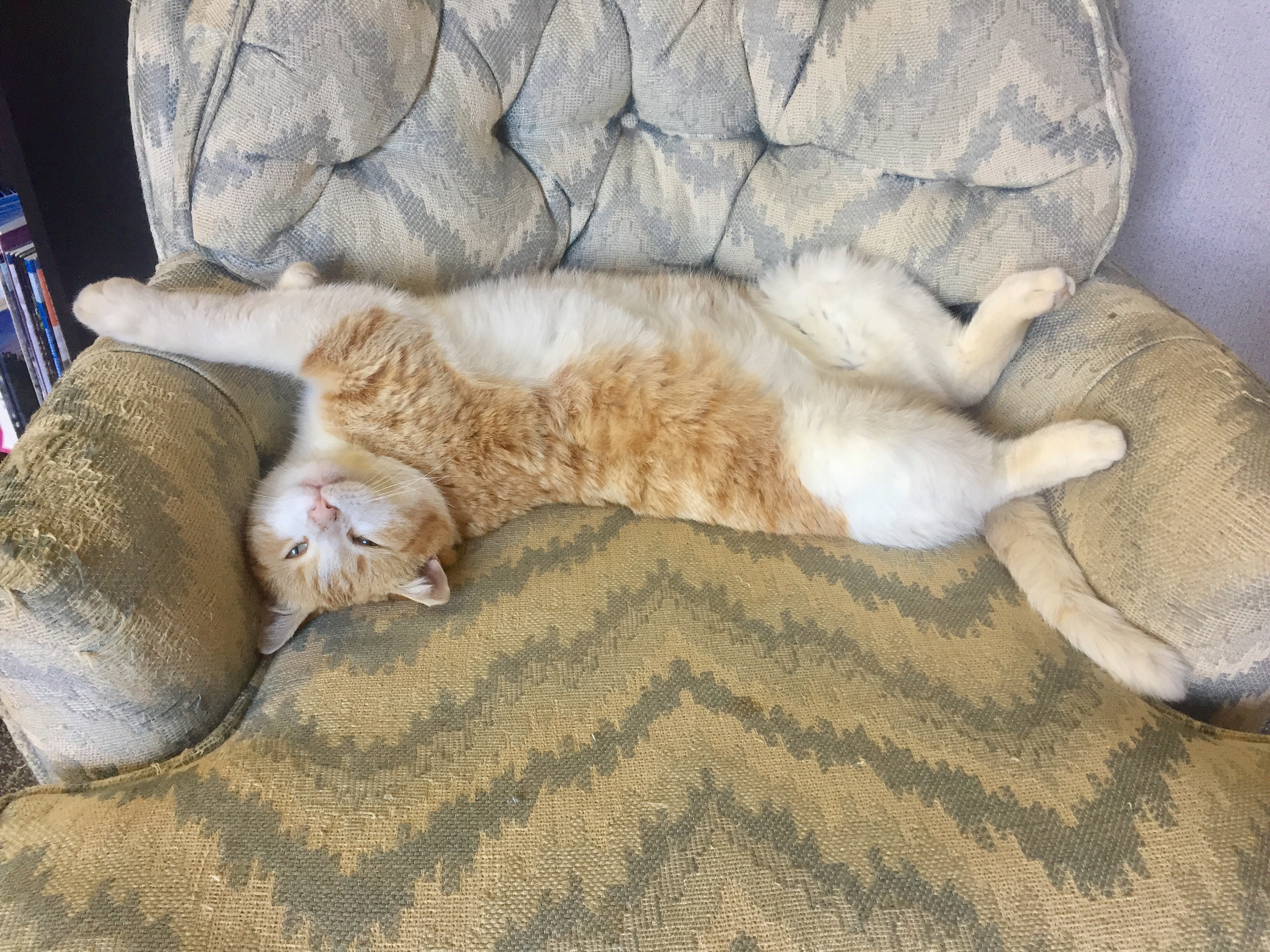
I don’t know about you, but I instantly warm to a business that has an office pet. There is just something special about a place that recognizes the importance of animals & makes room for the right ones. Windridge is such a place and we have a grand cat.
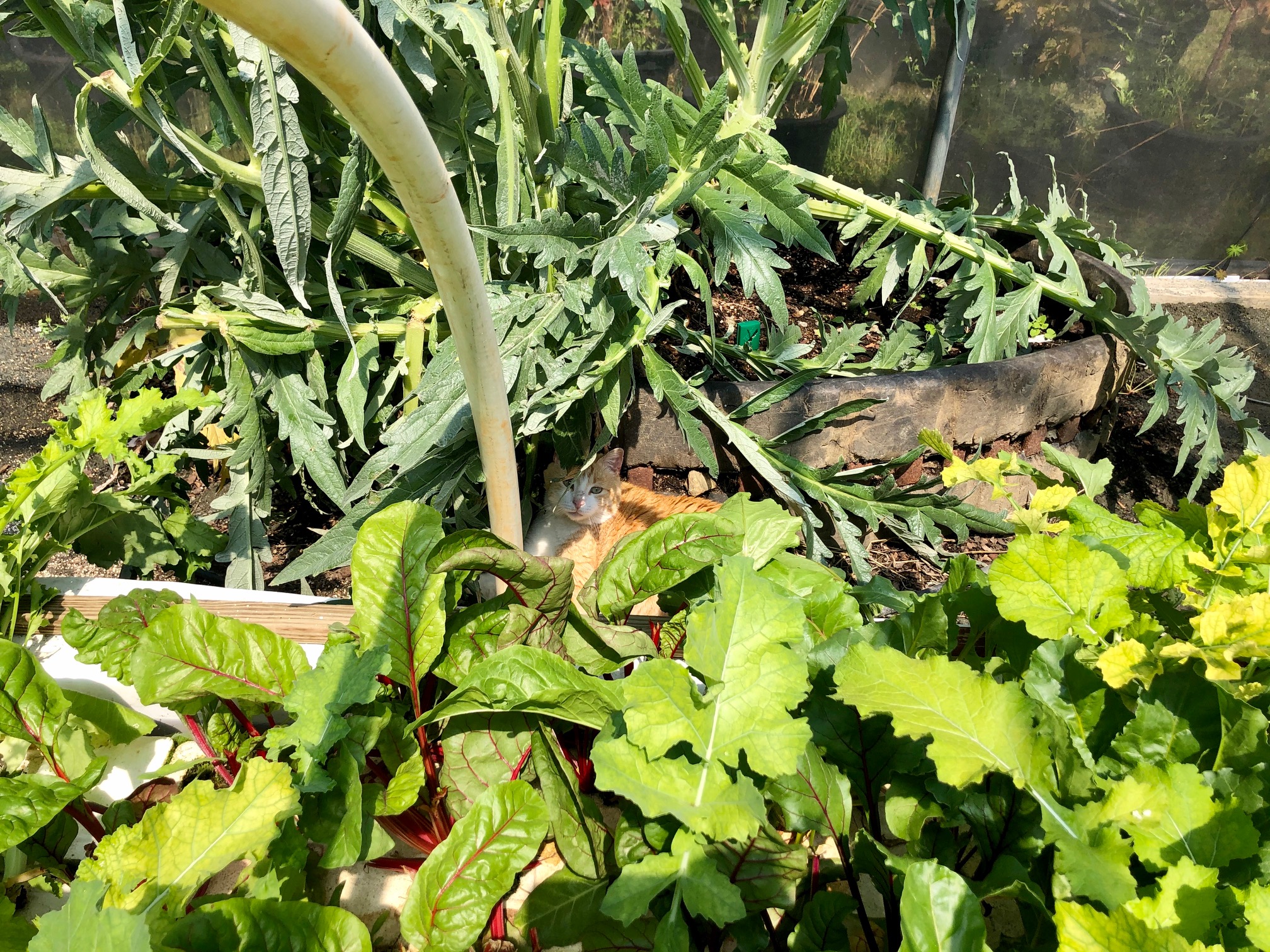
Leroy has been with the company for over five years now. We had previously lost our office kitty, Boots suddenly and the majority of us had decided, with iron resolve, that we were not going to get another cat under any circumstances.
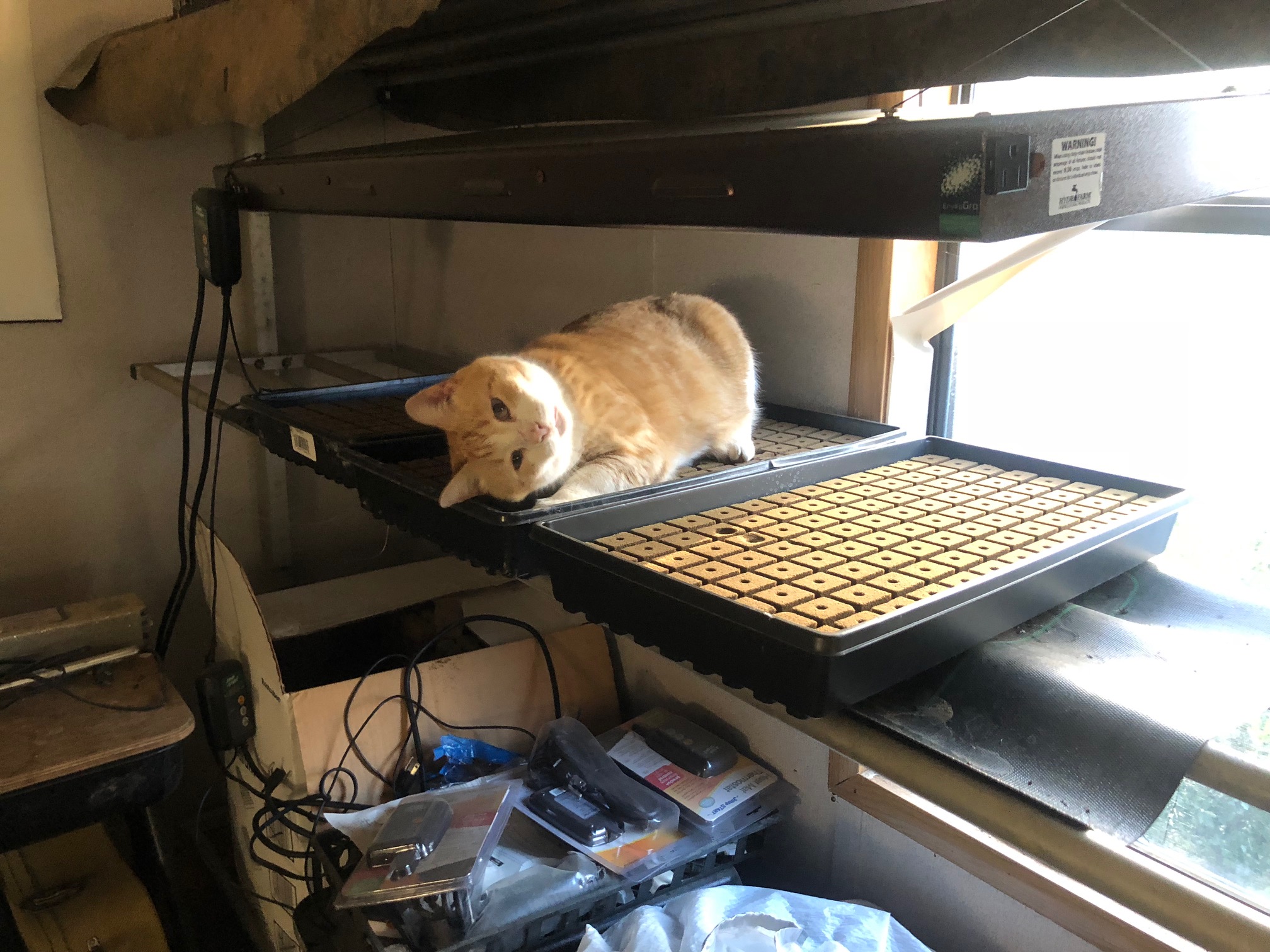
At that point in time a friend from Rockbridge County said that he had a “real special kitty”, “a cat unlike any other” (and believe me he is not a cat person) that was in need of a home. Leroy had come out of the woods behind his house on a day like any other. They tried to run him off without success. Leroy had then climbed a ladder to be closer to our friend who was working on his home. “that’s when I knew he wasn’t any ordinary cat” stated our Rockbridge Friend. Leroy overwintered in his new found, but temporary home. It was mentioned in conversation that we had lost our office kitty and that at least one of us felt that the office just want the same without one. Our friend was quick to mention Leroy, who wasn’t particularly fond of the grandchildren that visited his Rockbridge residence. Over time he won me over with Leroy stories and a plot to get a new office kitty was hatched.
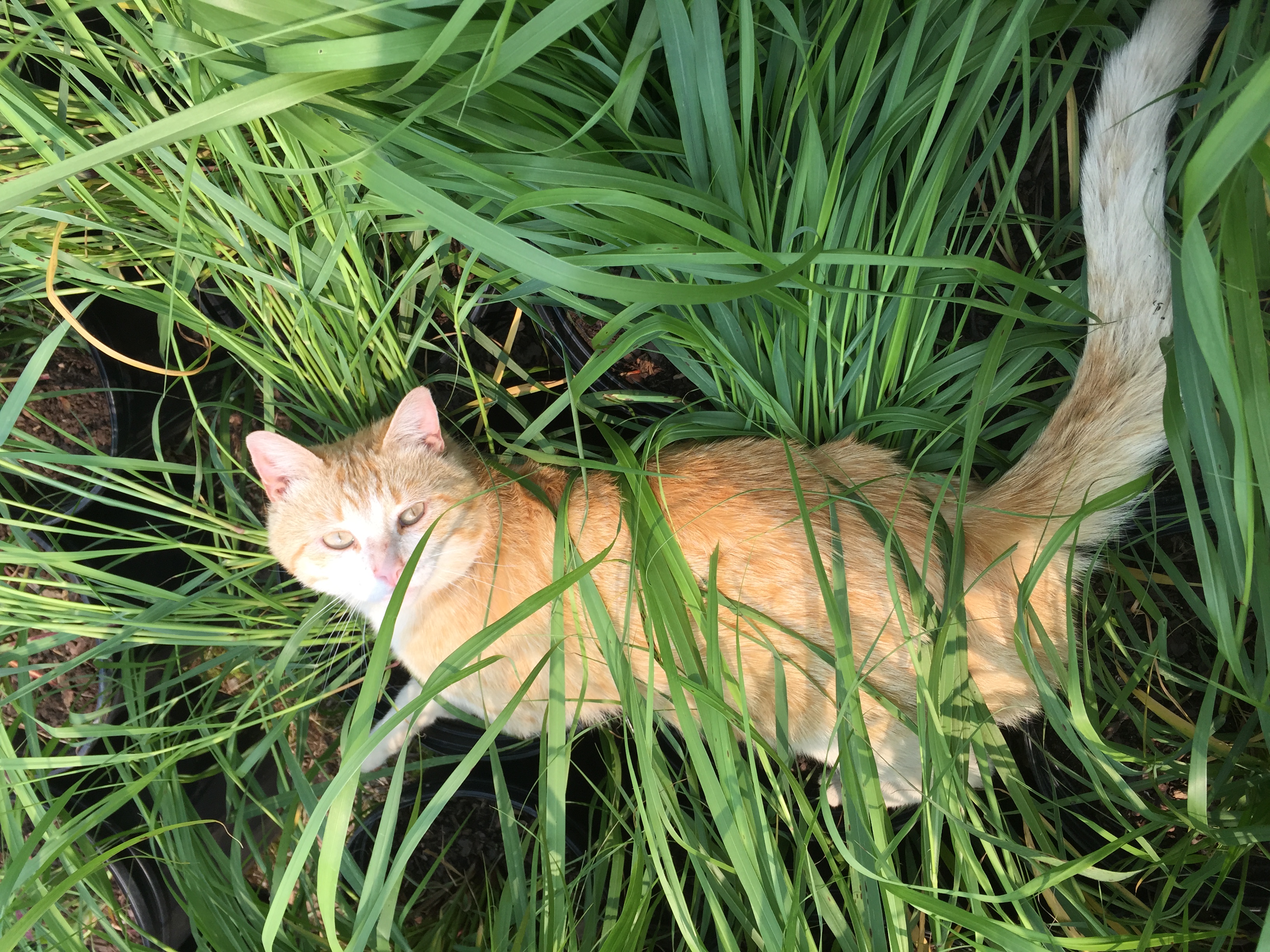
Now the story changes as to who you ask but in the end Leroy was smuggled into Afton. The company was a fluster, mostly because nobody wanted to get their hearts broken again after Boots. Leroy had a rough start, tussling with the farm dogs. Even went a round with our Office Manager, the Boss’ Wife, Christy. A move that was monumentally stupid. It appeared for a bit that Leroy’s goose was cooked. Then one day not too soon after his arrival he had a change of heart, as did we.
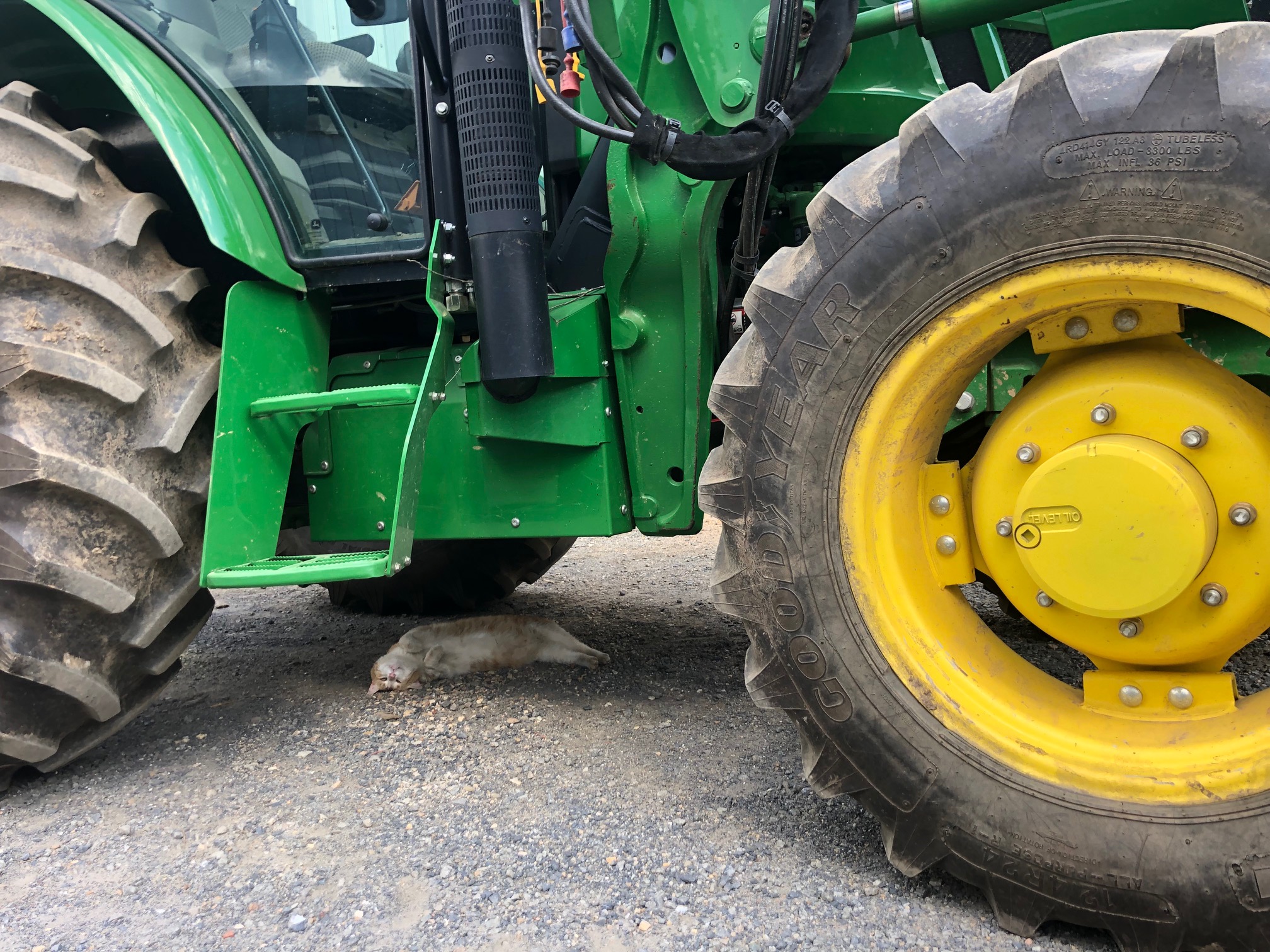
Although he is not officially on the payroll Leroy is an integral part of our company. He runs security detail, acts as a door stop as needed, chair warmer, heck he even takes messages when asked to do so. He has hitched a ride on several occasions into town and been brought back promptly. He does his old crusty kitty best to keep spirits high and soothe our most frustrating days.
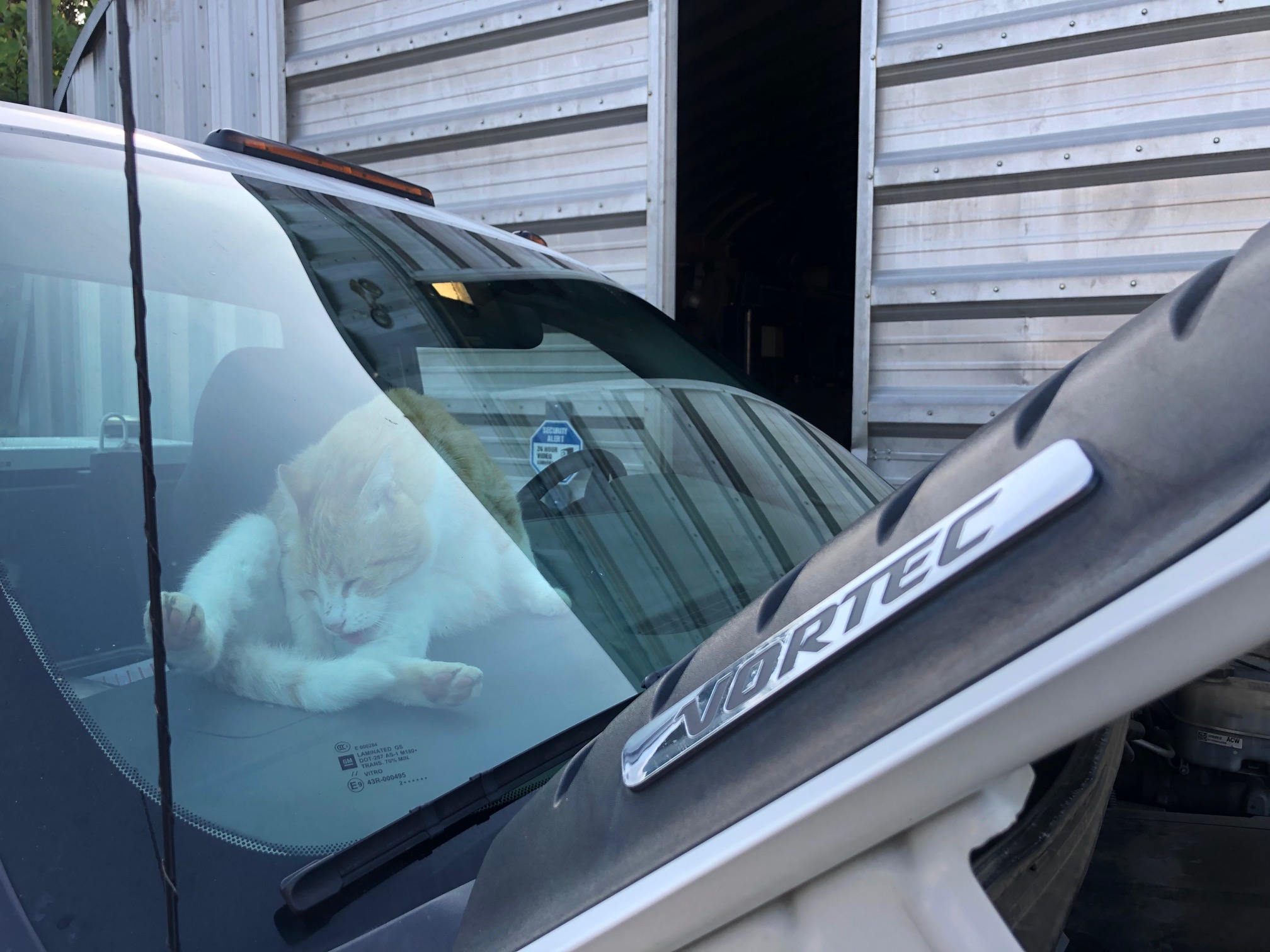
You can find him basking on the porch, sleeping in the office wherever he wants, or helping Paul in the shop.
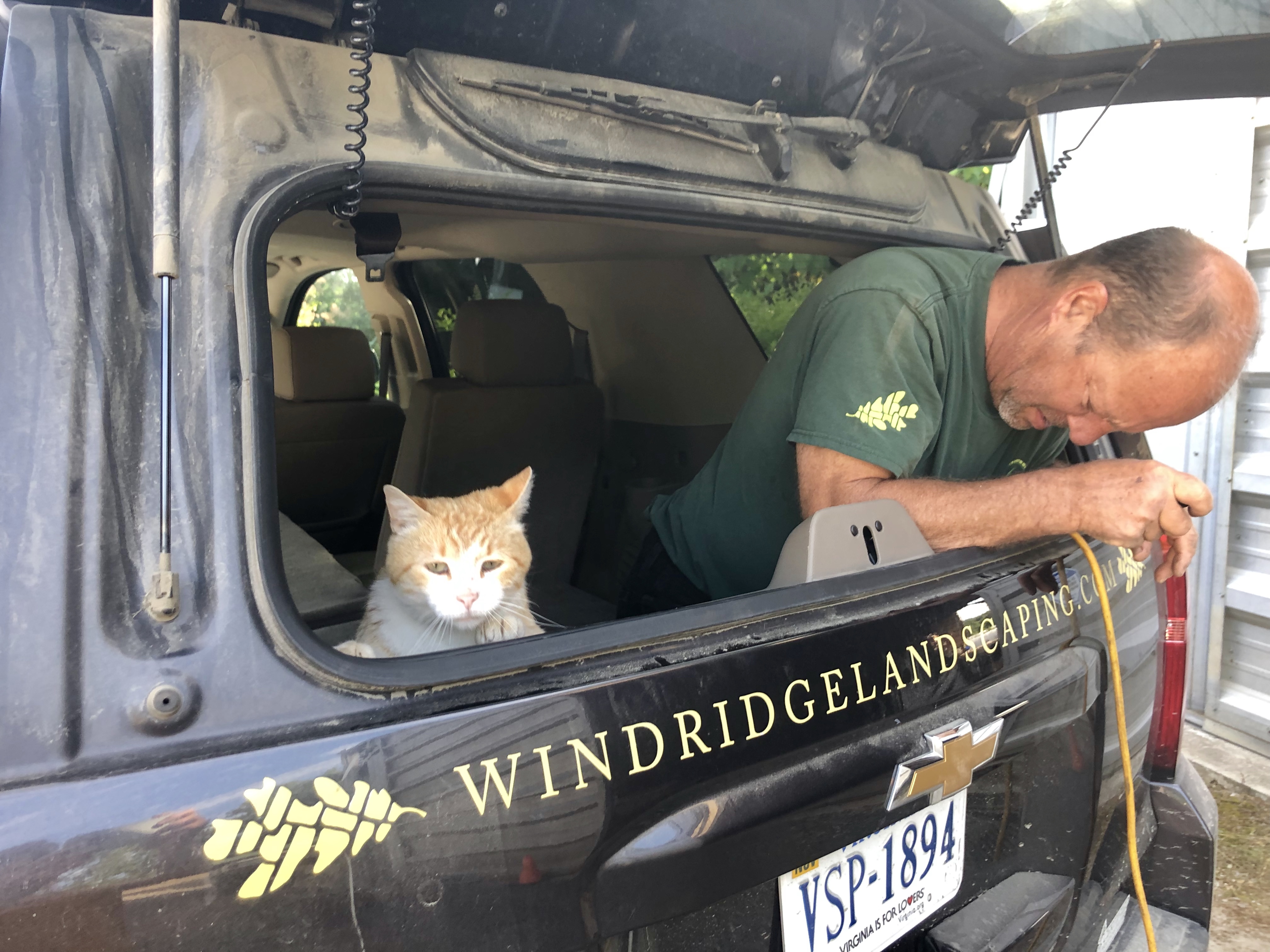
He loves helping the crews load up in the morning and Monday is definitely his favorite day. It’s the day his people come back. It takes a special group of people to welcome such a critter. We will never be sure what Leroy’s full story is but we know that the best chapters have been written with us here at Windridge and hope there are many more to come.

The Plant That Kills Birds

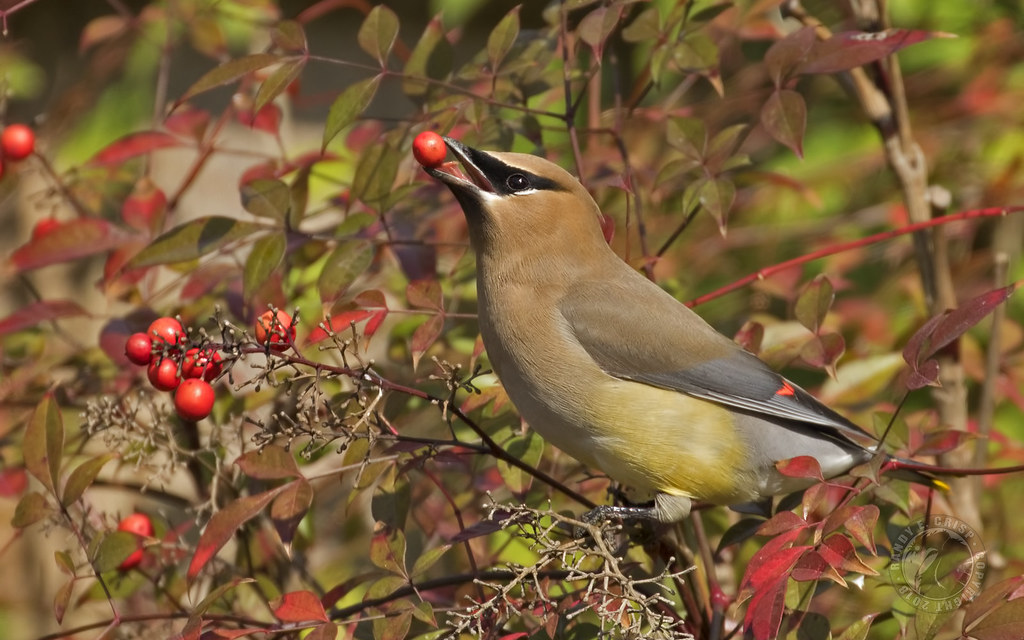
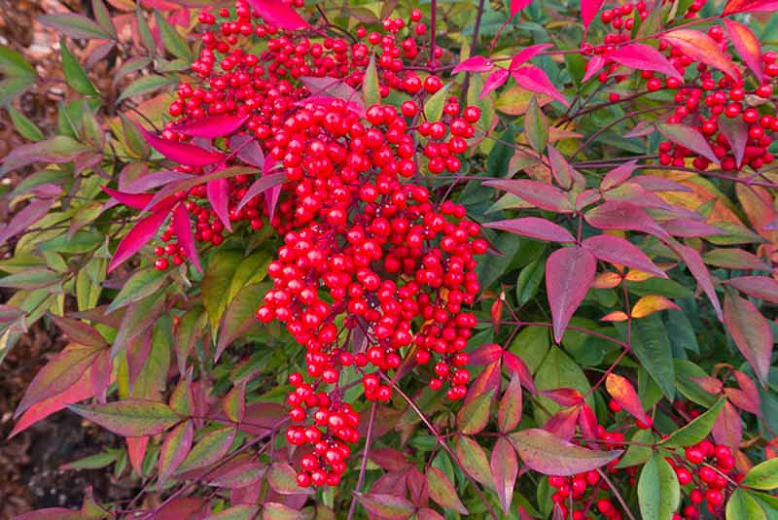
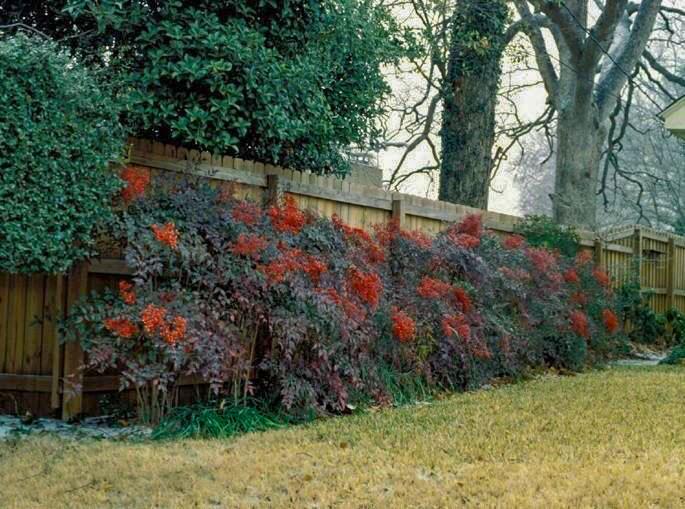
Now we all know this shrub Nandina, Sacred Bamboo or Heavenly Bamboo. No 90’s yard was complete without it. Thankfully it has fallen drastically from favor in recent years. The newer  “improved” cultivars have failed to preform in the landscape. Nandina domestica is found in most landscaping mixes in yards, parks, hospital grounds, and other locations. Its bright red berries and contrasting dark green foliage add color and texture to landscapes. Some homeowners even deliberately plant Nandina to specifically to provide food for birds, including the Cedar Waxwing, American Robin, Northern Mockingbird, Eastern Bluebird and other birds that depend on winter fruits to survive. Their reason being Nandina berries last for months, attracting hungry birds when food is in short supply. This couldn’t be further from the truth, quite the opposite actually. Professional studies now show planting Nandina does not help birds, it actually harms them.

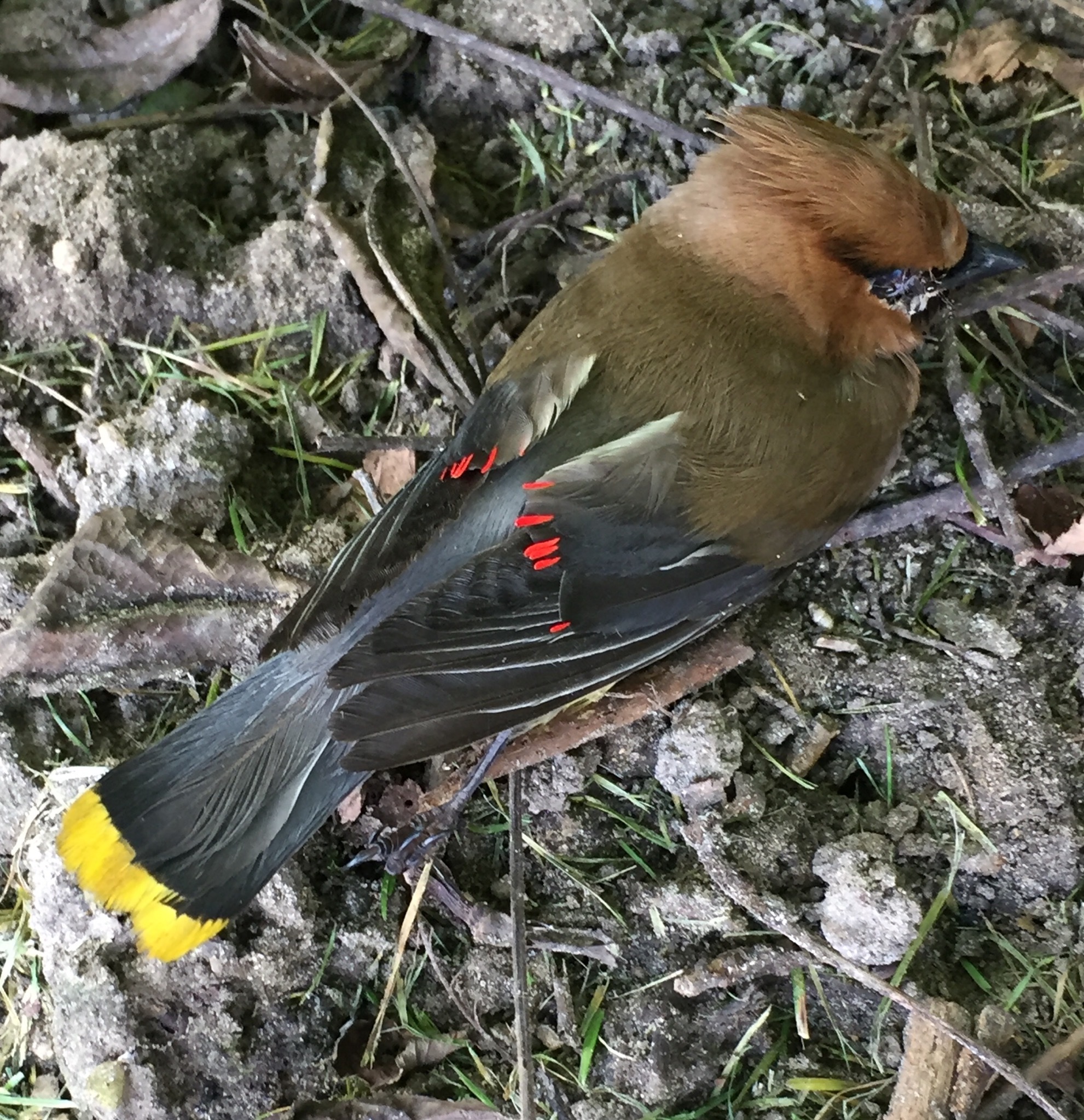
For instance, when dozens of Cedar Waxwings were found dead in a county in Georgia, researchers at a college of veterinary medicine, found the cause to be Nandina berries. Read their report. All the birds had intact Nandina berries in their crops. We discovered pictures of this online but felt they were too graphic to post in this blog. The poor birds had hemorrhaging in the heart, lungs, trachea, abdominal cavity and other organs. Bird deaths have also been reported in Houston and other parts of the country.

Come to find out Nandina berries contain cyanide  which is extremely poisonous to all animals. Sudden death may be the only sign of cyanide poisoning and death usually comes in minutes to an hour.

Furthermore, the U.S. Department of Agriculture (and most states at this point) classifies Nandina domestica as a noxious, non-native, invasive weed. Its origin is China and Japan. It has naturalized and invaded our national parks, widlife refuges,forests, parks, and other natural habitats throughout the U.S. Yet homeowners and commercial landscapers for some crazy reason are still pusing the sale of & planting this toxic species with thoughtless abandon.  Hydrogen cyanide is a painful and unnecessary way for birds to die. Nandina is also toxic to dogs, cats, and many other animals.

You can help by choosing to remove Nandina and plant natives in your yard. If you don’t want to rip out your Nandina, please at the very least prune the berry laden branches. We work with homeowners & landscape architects to find suitable subtitues for this plant and would be happy to consult with you.

Identifying & Managing Aster Yellows

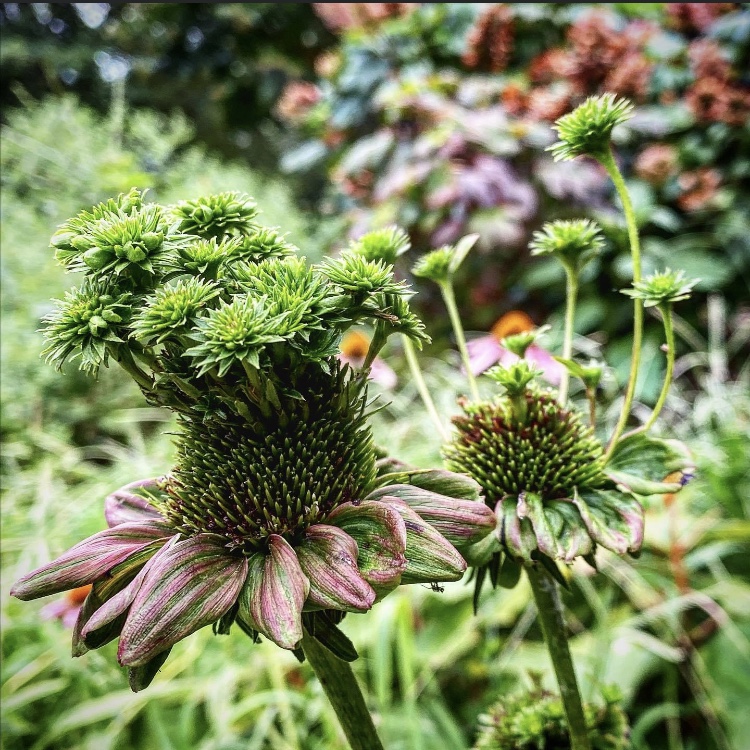
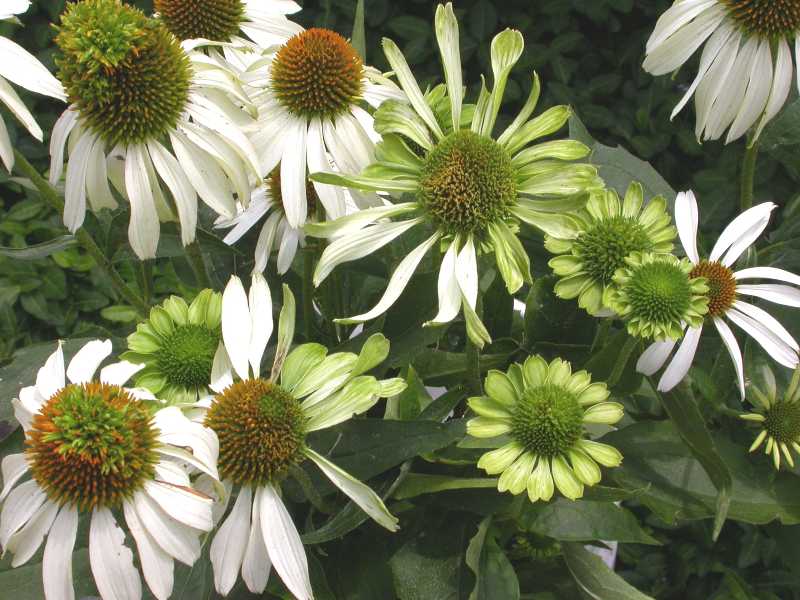
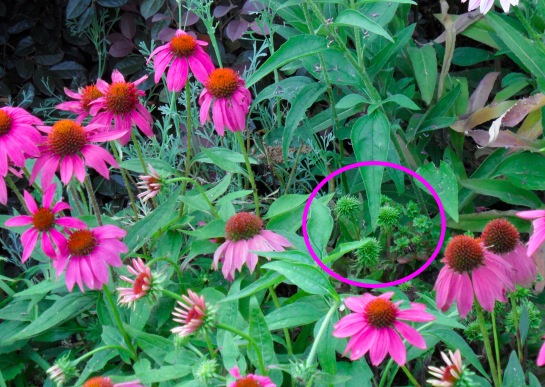
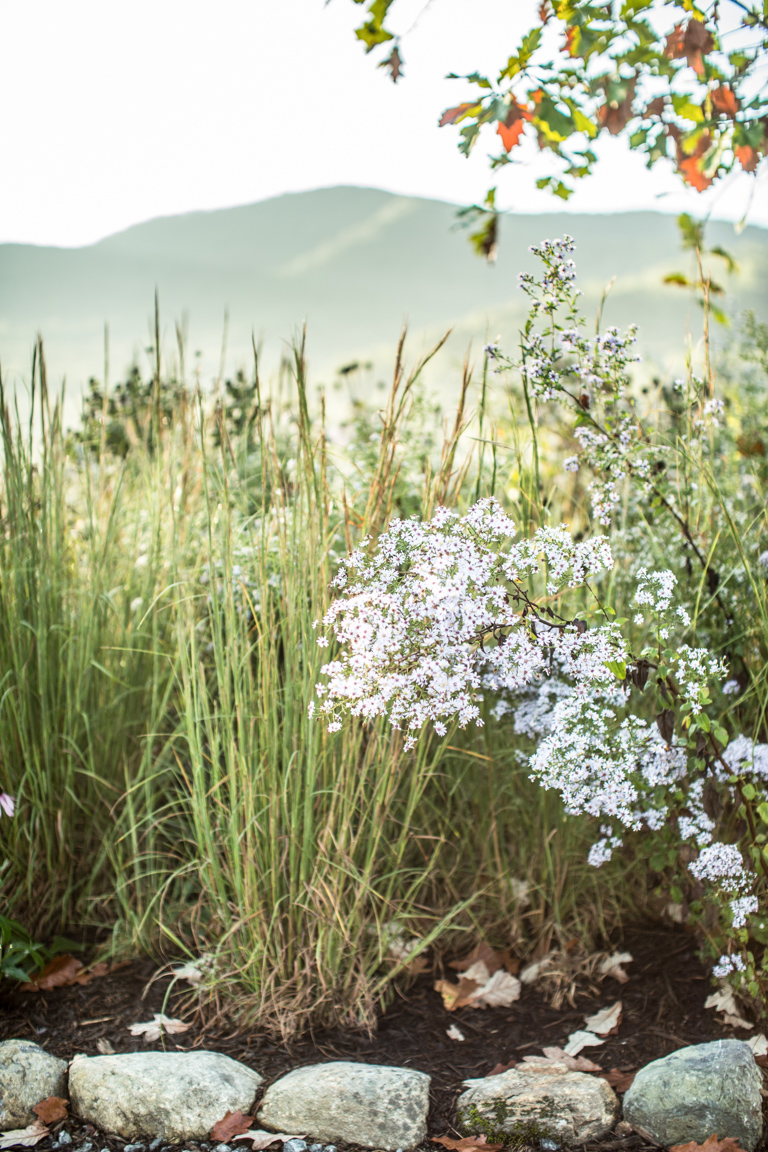
When walking by one of your garden beds there are many things to be on the lookout for besides beauty. The images in these pictures documents one of the classic symptoms of “Aster Yellows”. These Purple Coneflowers (above) display some of the most dramatic evidence of this non-fatal, but potentially prolific disease. Secondary flower heads emerging from primary flowers are a common sight. However, Aster Yellows is a disease that affects over 300 species of plants including herbaceous ornamentals, vegetables and even weeds.
Infected plants can serve as the starting place for the spread to other non-infected plants. The source of the problem is a bacteria-like microscopic organism known as a phytoplasma. A tiny insect known as a leafhopper most commonly spreads it. As the leafhopper feeds on infected plants, it is taking in this phytoplasma through the plant sap. Once inside the insect’s body, the disease organisms multiply rapidly. Eventually, the phytoplasma is then reintroduced as the leafhopper feeds on healthy plants.


Symptoms of Aster Yellows develop most quickly and are more severe when temperatures are warm. In cooler temperatures, plants may be infected without any visible indication. Unique symptoms also vary between plant types. Symptoms common to most infected plants include yellow foliage, stunted growth, flowers that remain on the green side, and an overall distorted look.
Controlling Aster Yellows is challenging. There is no known cure for the disease, and chemical control of the vectoring leafhopper is usually not effective and therefore not recommended. The best means of control for this problem, as well as many other garden diseases is good sanitation. Remove and destroy any infected plants you see immediately. This includes all weeds, since they can be a common host source for this disease.


Lastly, not all plants are susceptible to the disease. Most woody shrubs seem to avoid the problem as well as a few herbaceous plants such as salvia, geraniums and impatiens. Choosing resistant plants and removal of infected plants are the best control methods for controlling Aster Yellows in the home landscape. Keep vigilant and when in  doubt consult a professional.

Drainage Improvements Don’t Have To Be Ugly

We have been experiencing ever increasingly strange weather patterns over the past several years, and you don’t need to be a Climatologist or Environmental Science Major to be aware of it. After weeks of no rain it has returned with a vengeance! We received over 3″ in 30 minutes the afternoon of July 30th alone. That’s an awful lot of water that needs to be diverted somewhere and it’s gonna move quickly.

Now we have all seen the black corrugated pipe that snakes from downspouts. Some of us have even tripped on the outlets that have been buried & daylighted to drain into the yard, and if you have a rat guard at the end of that pipe then you know how you are perpetually monitoring it & cleaning it out.

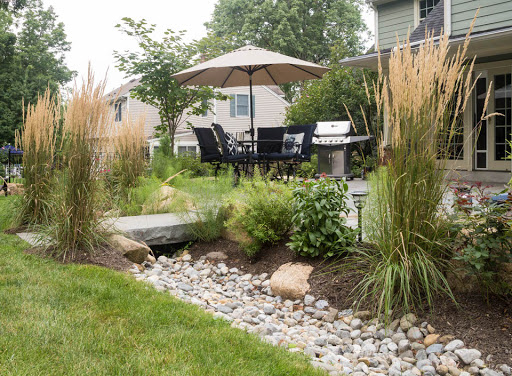
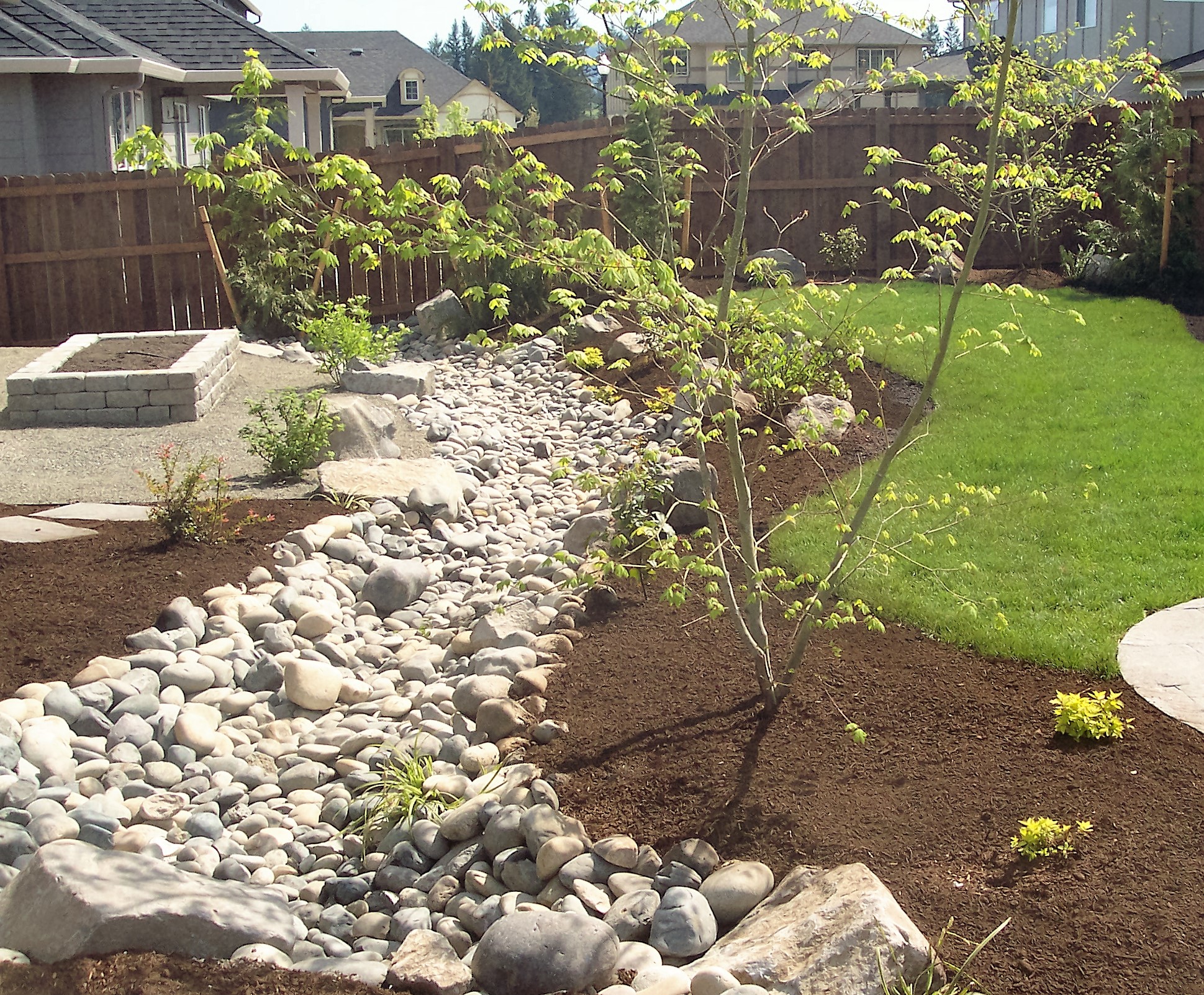
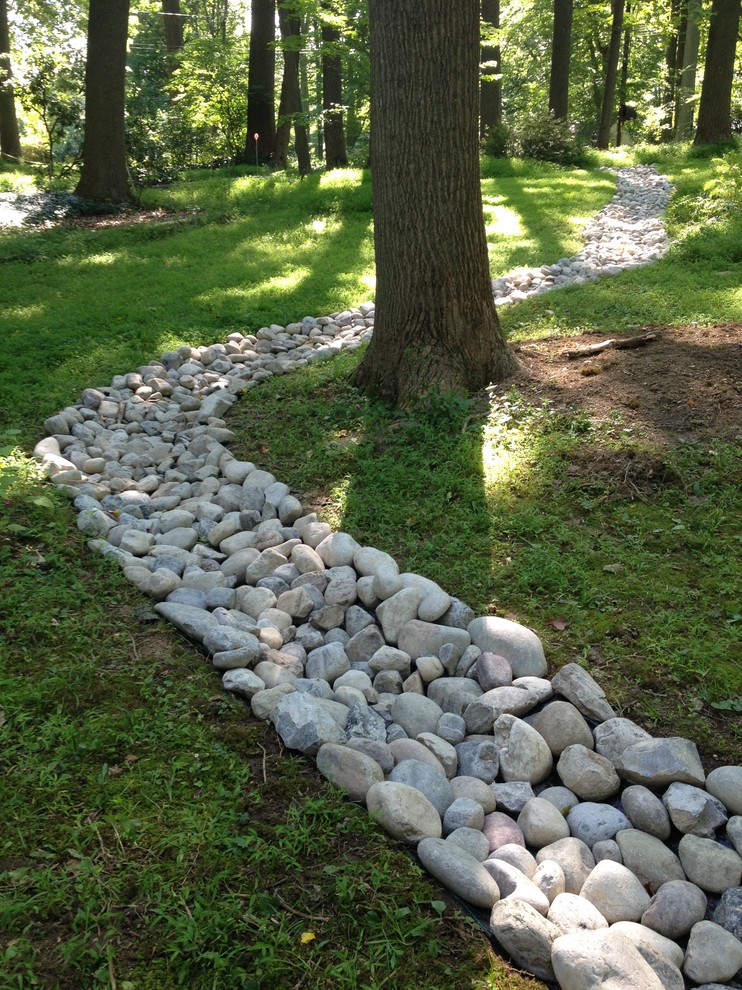
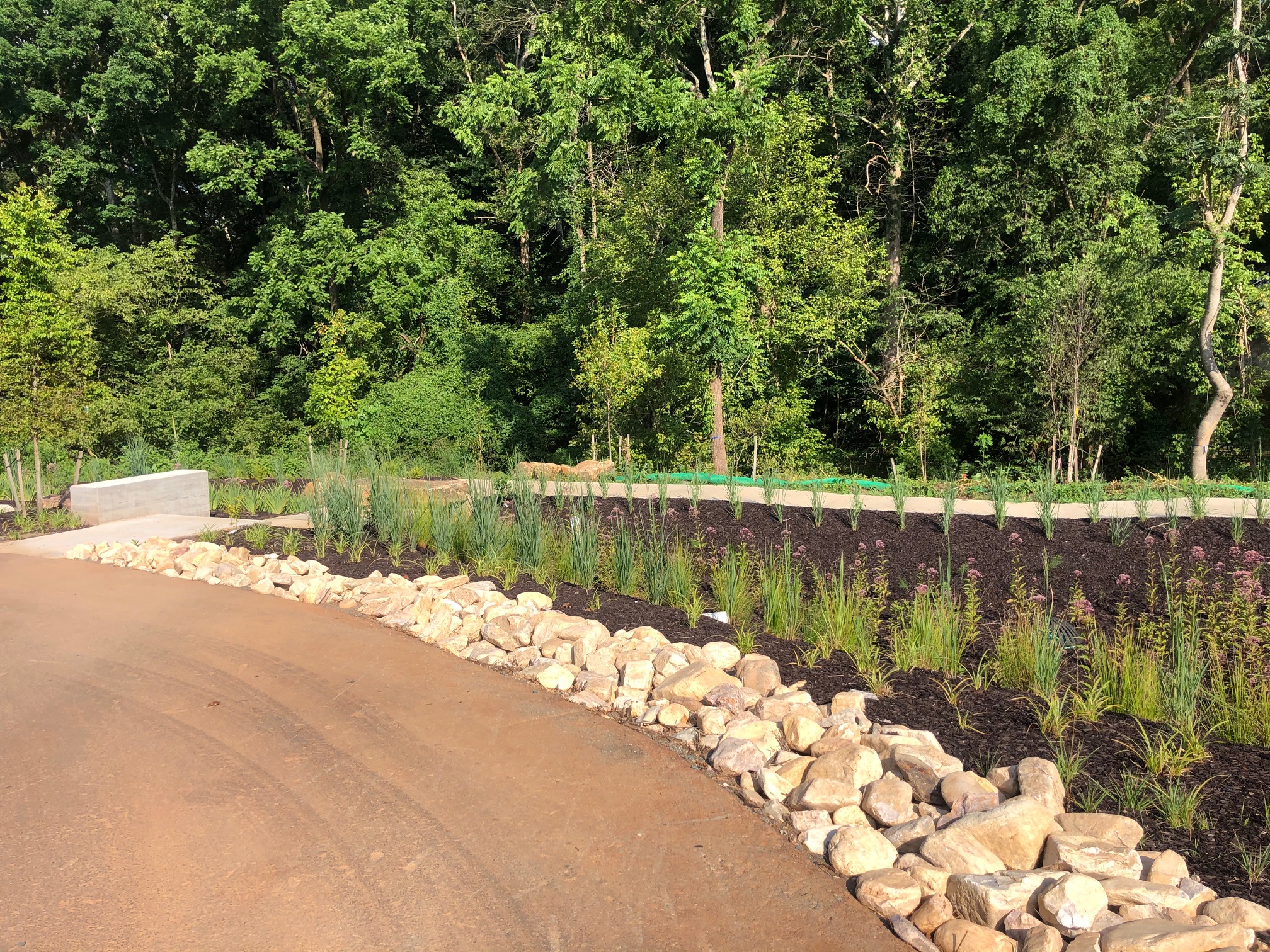
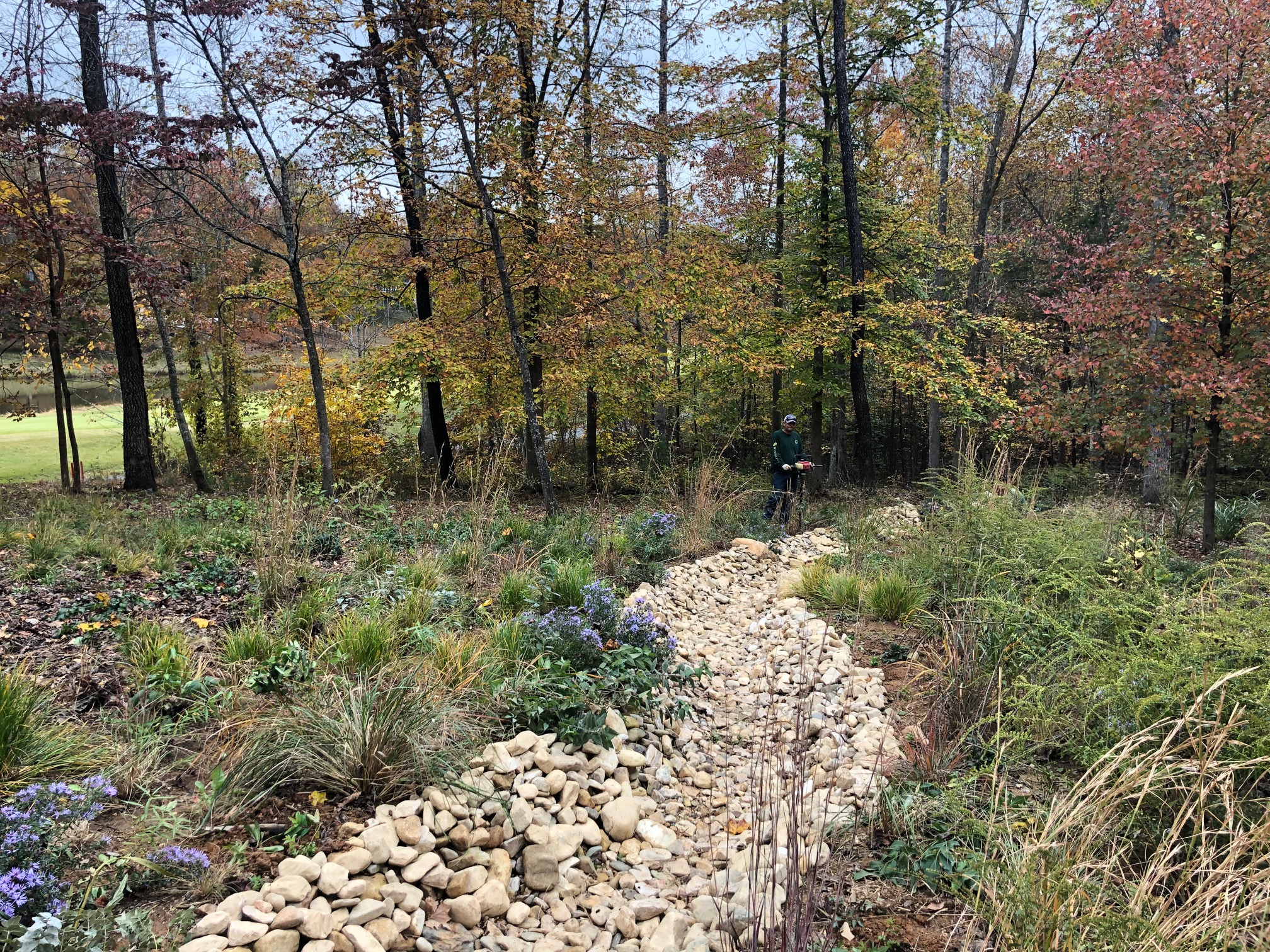
In a lot of cases you can substantially improve drainage while making it highly attractive without having to install a full blown French Drain. Drainage swales can be a thing of function and beauty. Some of our clients even elect to place stepping stones into the swale to allow easier access to parts of the property. We are seeing swales & dry creek beds utilized regularly on commercial projects in an effort to capture & slow stormwater runoff. Even going so far as to utilize boulders to create natural check dams.

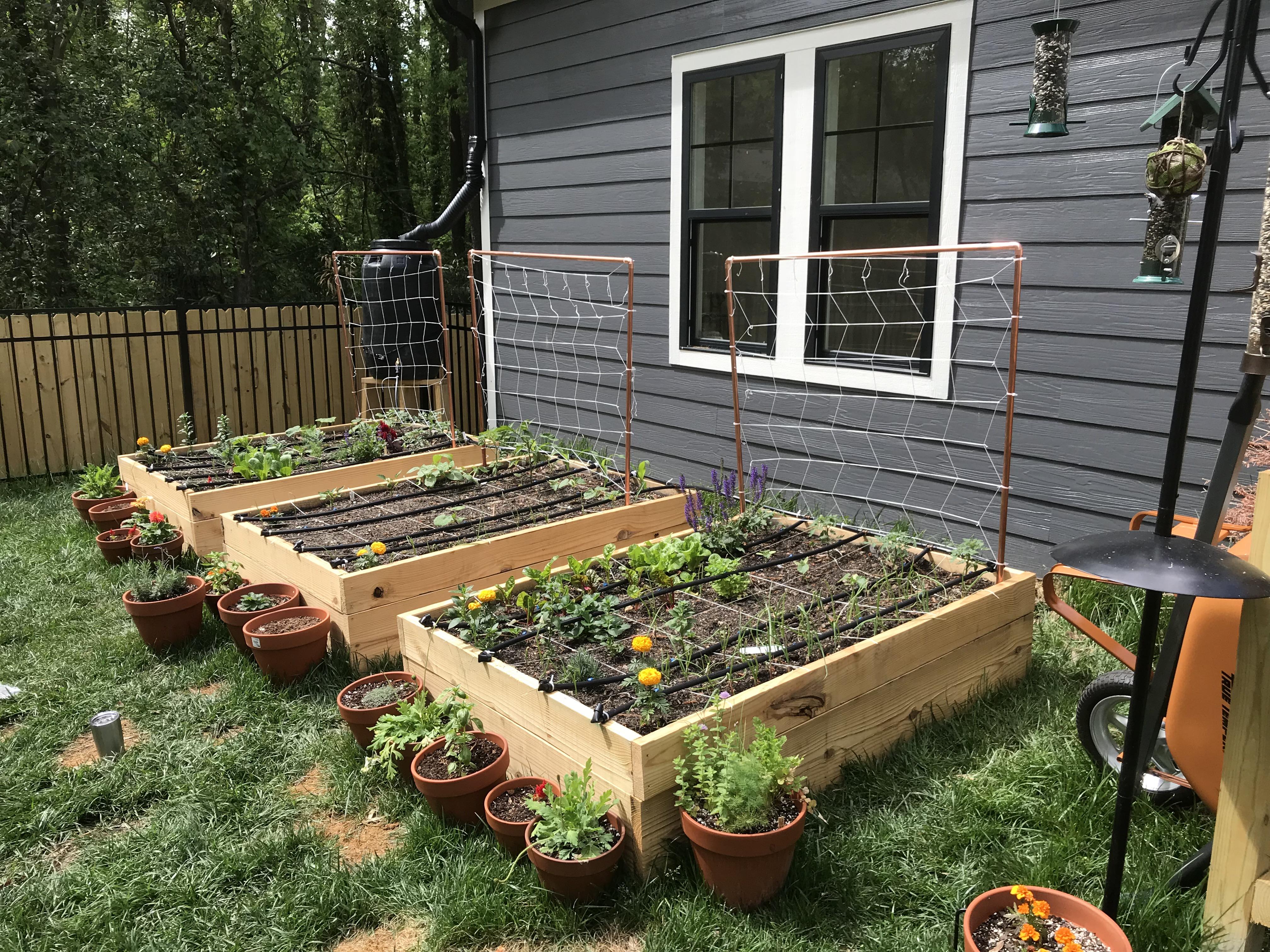
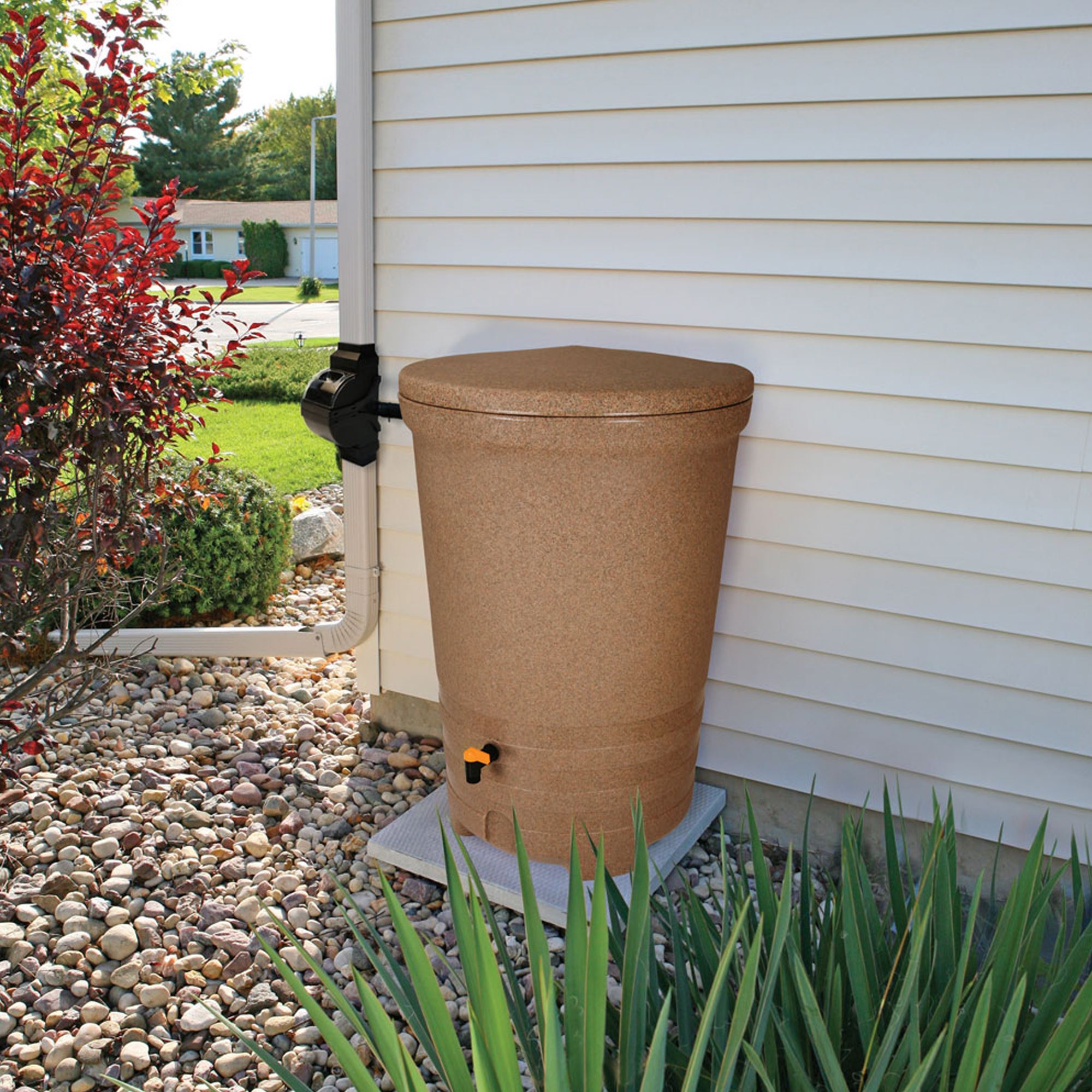
With so many people gardening this year a rain barrel may also be an option. Some go so far as to hook timers to their barrels and create an automated irrigation system to water their vegetable plants.

With the increasing cost of municipal water a rain barrel is a practical and inexpensive way to keep costs to a minimum and utilize what is falling in your yard.

The options for drainage improvements are are only limited by the imagination. Don’t intimidate yourself into thinking that a drainage improvement project will be cost prohibitive either. Most often times the sooner you can address a water problem the less expensive it is. We are at the ready to discuss options and ideas with you.

Made In The Shade On The Mountain

Summer Heat is the buzz word of the week! You almost can’t turn any direction without someone mentioning how hot it is, and the pop up thunderstorms are a daily reminder that Summer is in full swing. We lucked out this week, not only in getting the opportunity to work in close proximity of the Blue Ridge Parkway, but also with natural stone.

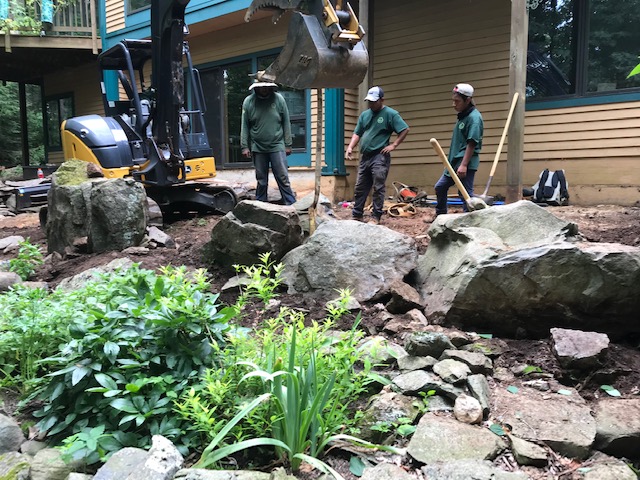
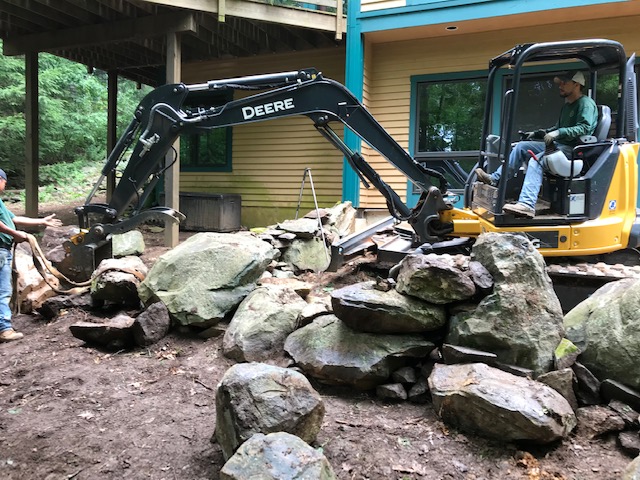
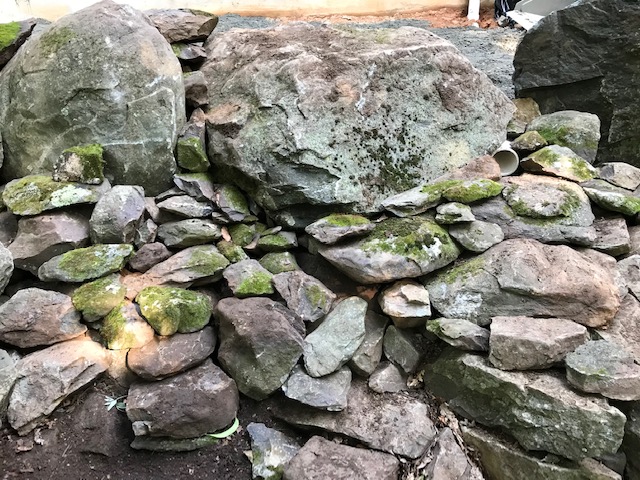
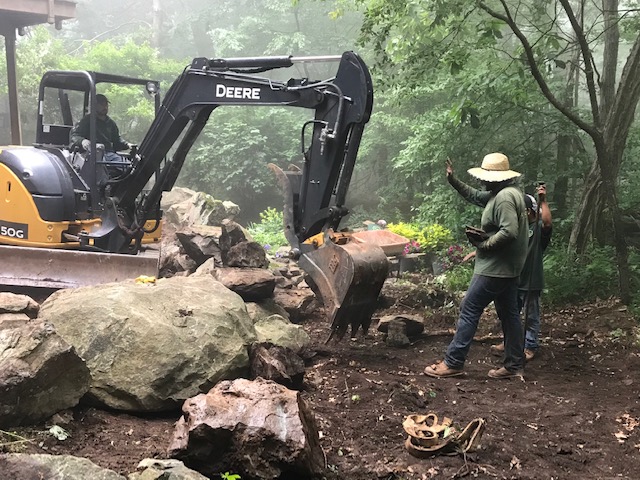
The homeowner had some boulders on the property that we were able to condense and use to build the walls. The forest had already added beautiful mosses and lichens that set off the coloration in the native stone.

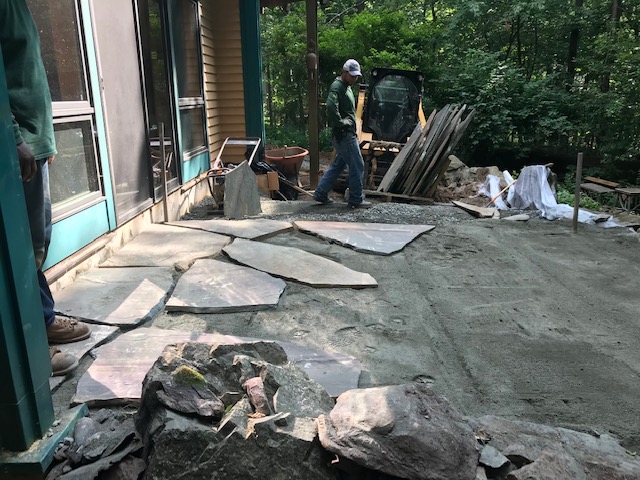
We continued with natural stone for the patio surface, using Natural Cleft Full Color Range Bluestone from Pennsylvania. This is a dry-laid application on a compacted stone base.

All the drainage was addressed before back filling.  Even when we finish with this hardscape work of art, although it is brand new, it will look like it has been there forever. A private custom built mountain oasis!

Caterpillar Season

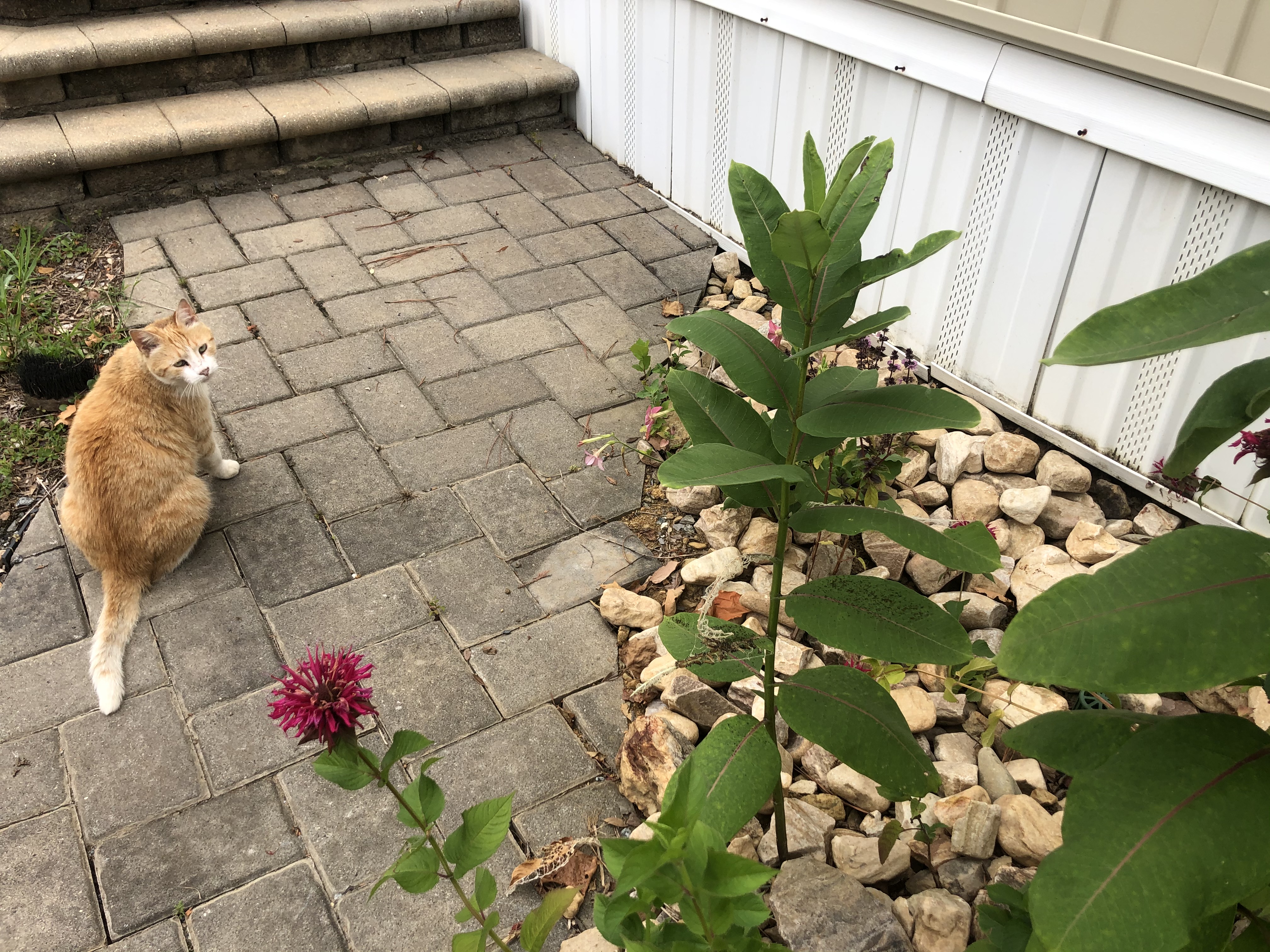
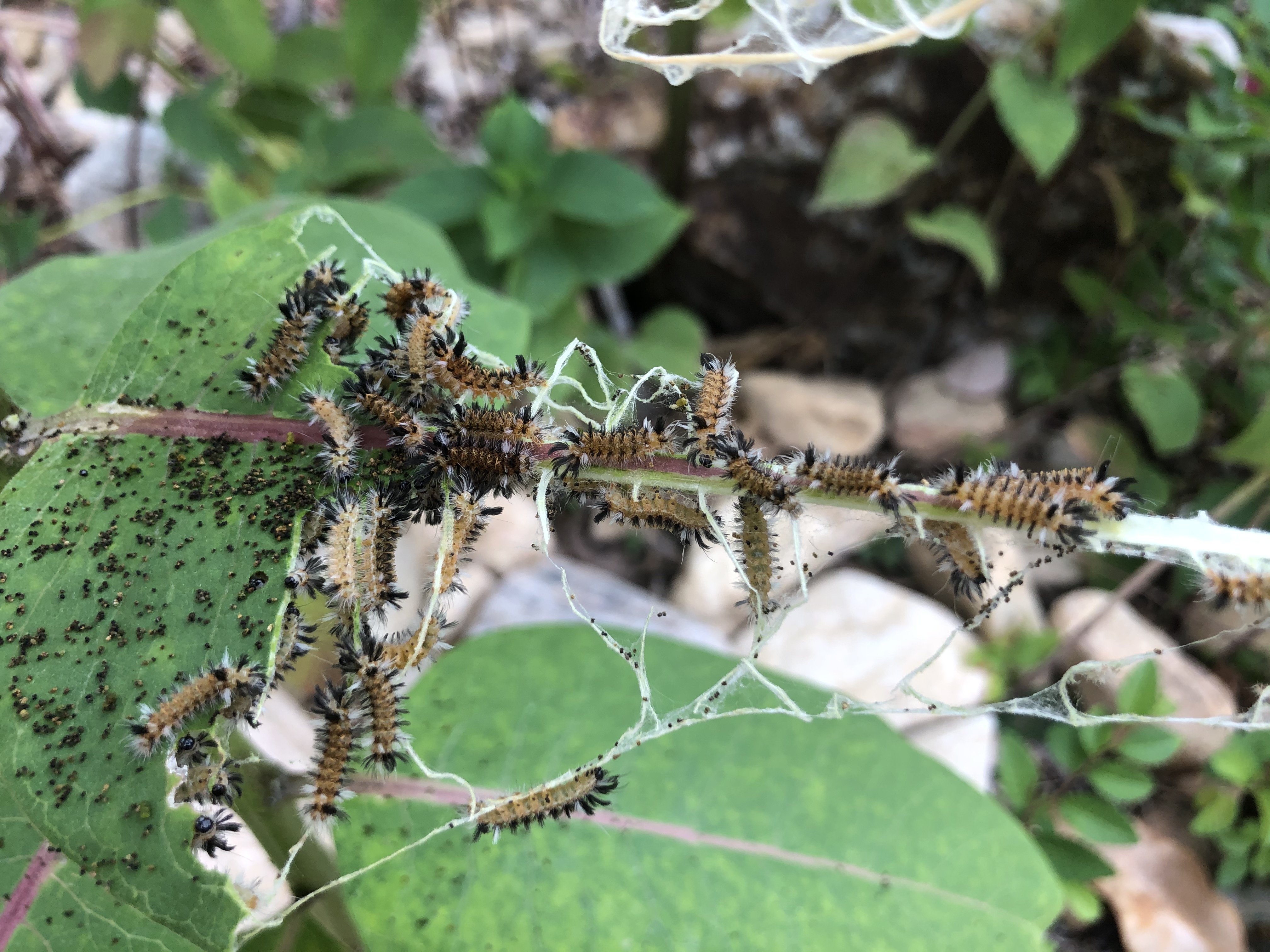
The caterpillars have arrived! Over the years we have pushed to install native plants on projects whenever possible, and has extended to our office here in Afton. This morning our office cat, Leroy drew our attention to our patch of Common Milkweed (which is surprisingly fragrant). Upon further inspection we discovered that the Milkweed Tussock Moth eggs had hatched and the caterpillars were already feasting!

Native plants offer substantially more benefit to local wildlife because they co-evolved together. Other plants like Butterfly Bush (terribly misnamed) offers very little value & is actually detrimental to butterflies. So much so that contentious gardeners now avoid planting them. If you are in the market for plants that will support pollinators & be more sustainable then consider using Native ones. We would be happy to make suggestions and even design a Native Landscape for you.

*If you discover an insect munching away on a plant in your yard it is important to identify it before applying pesticides, as it could be a beneficial, native insect* Remember plants are food too!

Overlaying Concrete

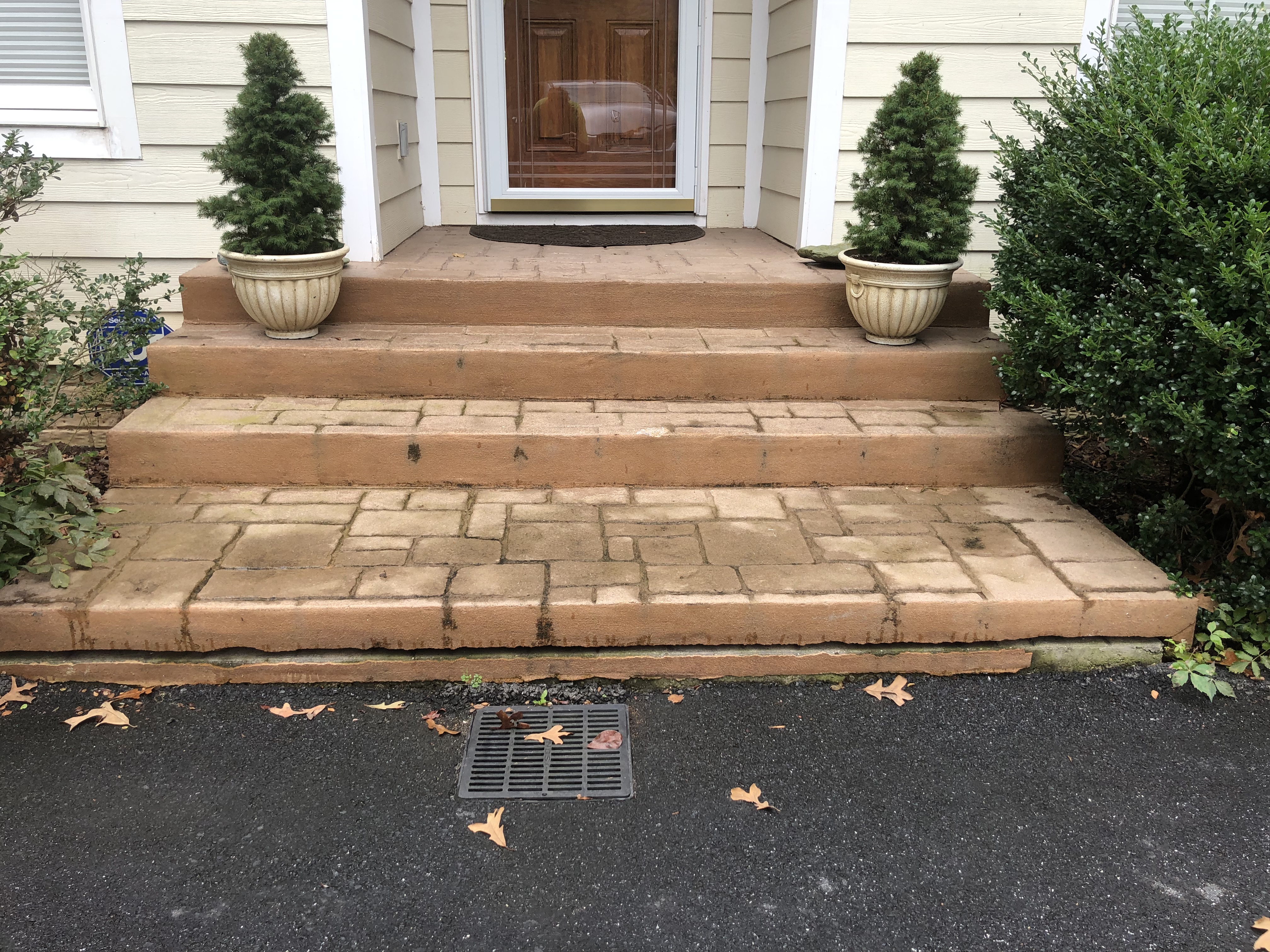
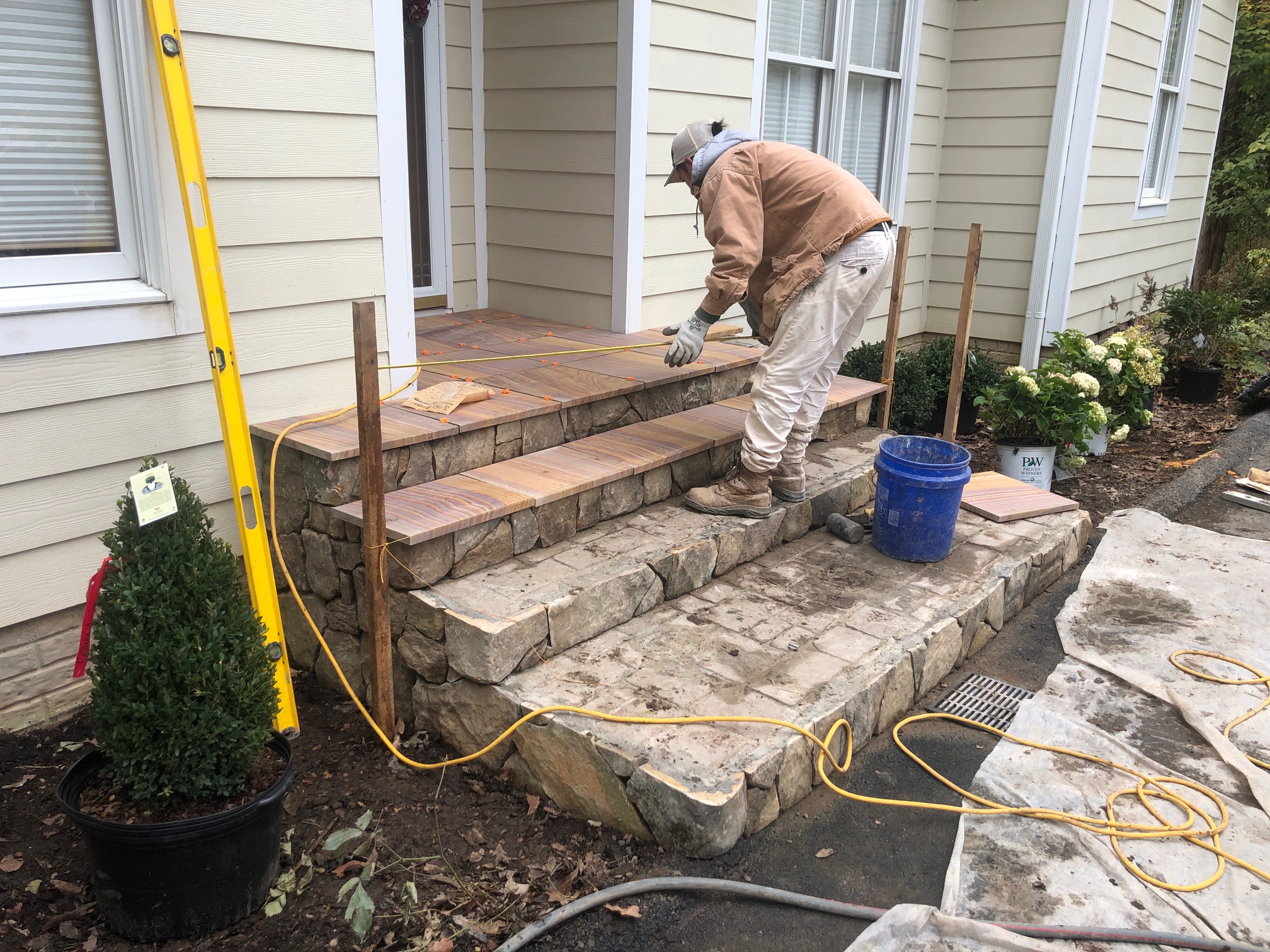
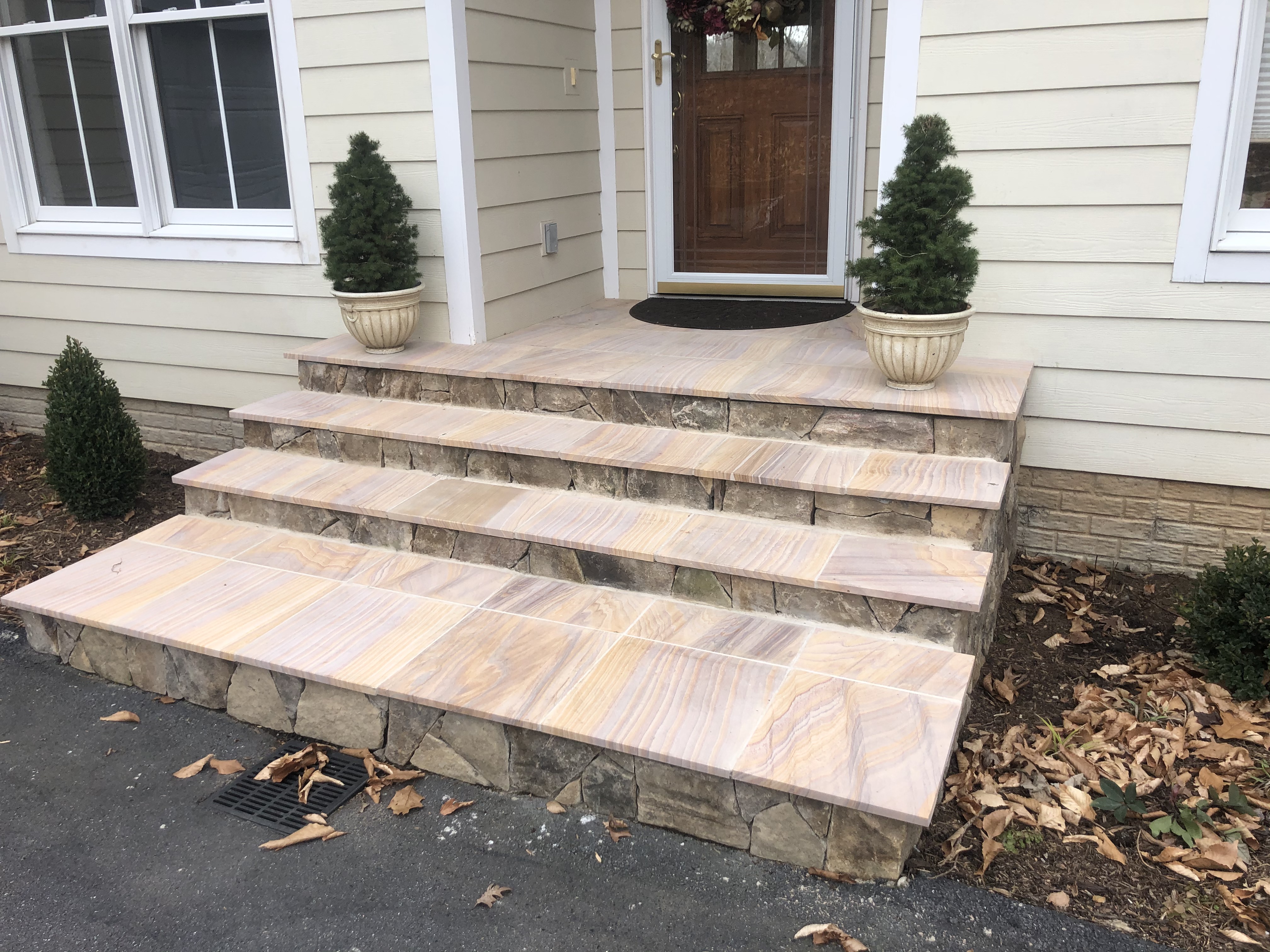
Did you know that you can overlay most poured concrete? While scored & stamped concrete can look nice in our area for a while, over time it will crack and resettle leaving gaps & uneven surfaces. Leaving you to spend that money you saved on the front end on fixing something that didn’t last the amount of time you were hoping for.

Even painted block foundations can be veneered in stone to look more natural and interesting. We also overlay front stoops and reinvigorate your daily welcome home.
Go ahead and give us a call to get your project started by setting up a consultation. 434-361-1588

Landscaping Is Essential

As a small local business Windridge is doing everything we possibly can to keep our staff employed while providing an even safer work environment, adhering to new safety guidelines. We are working from outside on our farm, remotely from work trucks, and keeping as few as possible in the office. Everyone, including our crews, are practicing social distancing. We are all adjusting & adapting daily as the ever changing situations dictates. Stepping up to continue to serve our local community as we have done so for over 30 years. Our goal is to develop even stronger relationships with our clients.

While you are inside your home, for the time being, Landscaping & Hardscaping projects can continue outdoors to extend your living space for your present & future enjoyment

We combine your goals & ideas with our knowledge & experience, just as always to create your unique & functioning landscape.

Patios And Pool Decks

Our skills are not limited to just landscaping either. We are able to design & install patios, pools, outdoor kitchens, fire places, retaining walls (with & without stairs), freestanding seat walls, driveways, water features, gardens & more.

We are here to help by taking care of ourselves & those around us, on both personal & professional levels.  If we can enable you to enjoy a little extra time in your yard watching spring come to life then we are happy to be involved.  If there is anything we can potentially do for your home don’t hesitate to reach out to us. We are here.

Annuals & Perennial Plants Create Winter Interest

It’s obvious Virginia has entered the dead of winter, and we are all visually starving for ‘proof of life’ in the yard. It can be depressing to be cooped up inside, trying to stay toasty warm, only to leave the house with nothing pretty to look at along the way. True, that we live in one of the most difficult areas in which to achieve having winter flowers in the yard, but it is far from impossible. All it takes is a little creativity and not necessarily on a big budget either.

There are numerous trees, shrubs, & perennials that will bloom in winter, even some native options. We design a lot of landscapes for clients that include points of winter interest. For the purpose of this blog we are focusing on our own front entrance which also incorporates inexpensive annuals.

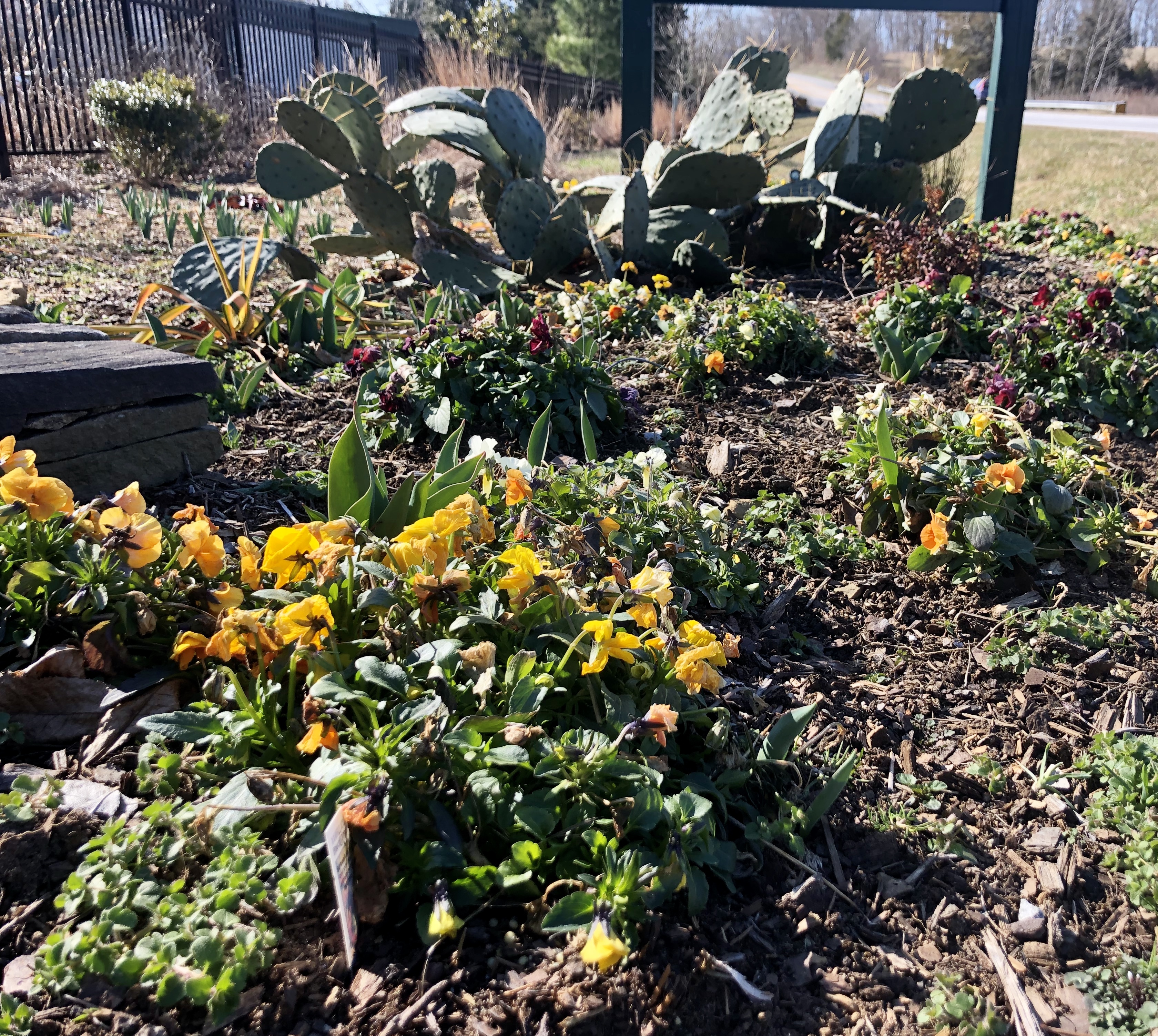
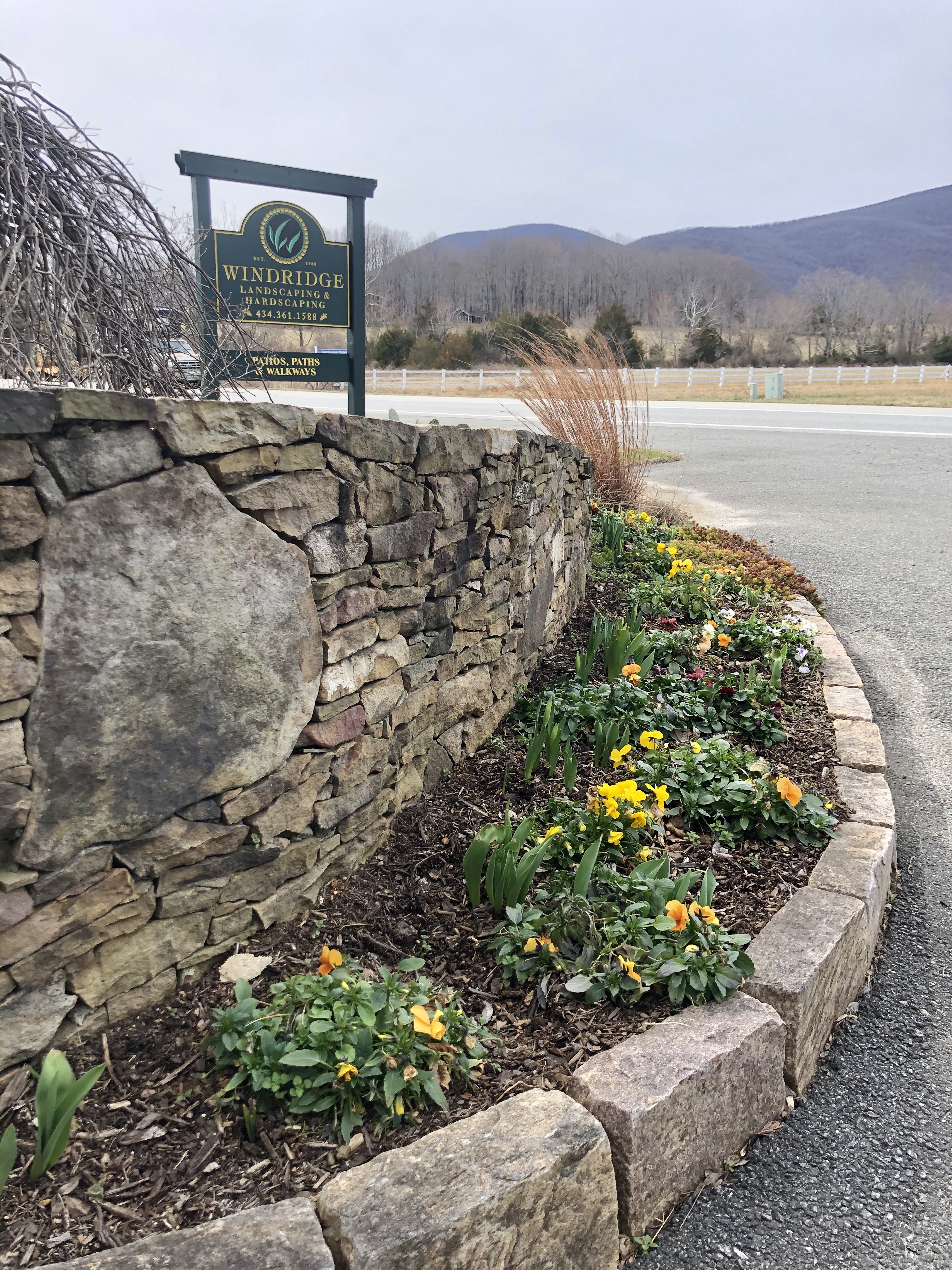
Above: The annual violas (which are much more robust than pansies in our area) add a pop of color while the perennial Angelina Sedum, & Bluestem Grass hold their places in the winter landscape. The low growing nature of the winter annuals really showcase the stone entrance walls. The violas will persist until mid May. The grasses will be cut back in the end of March to beginning of April.

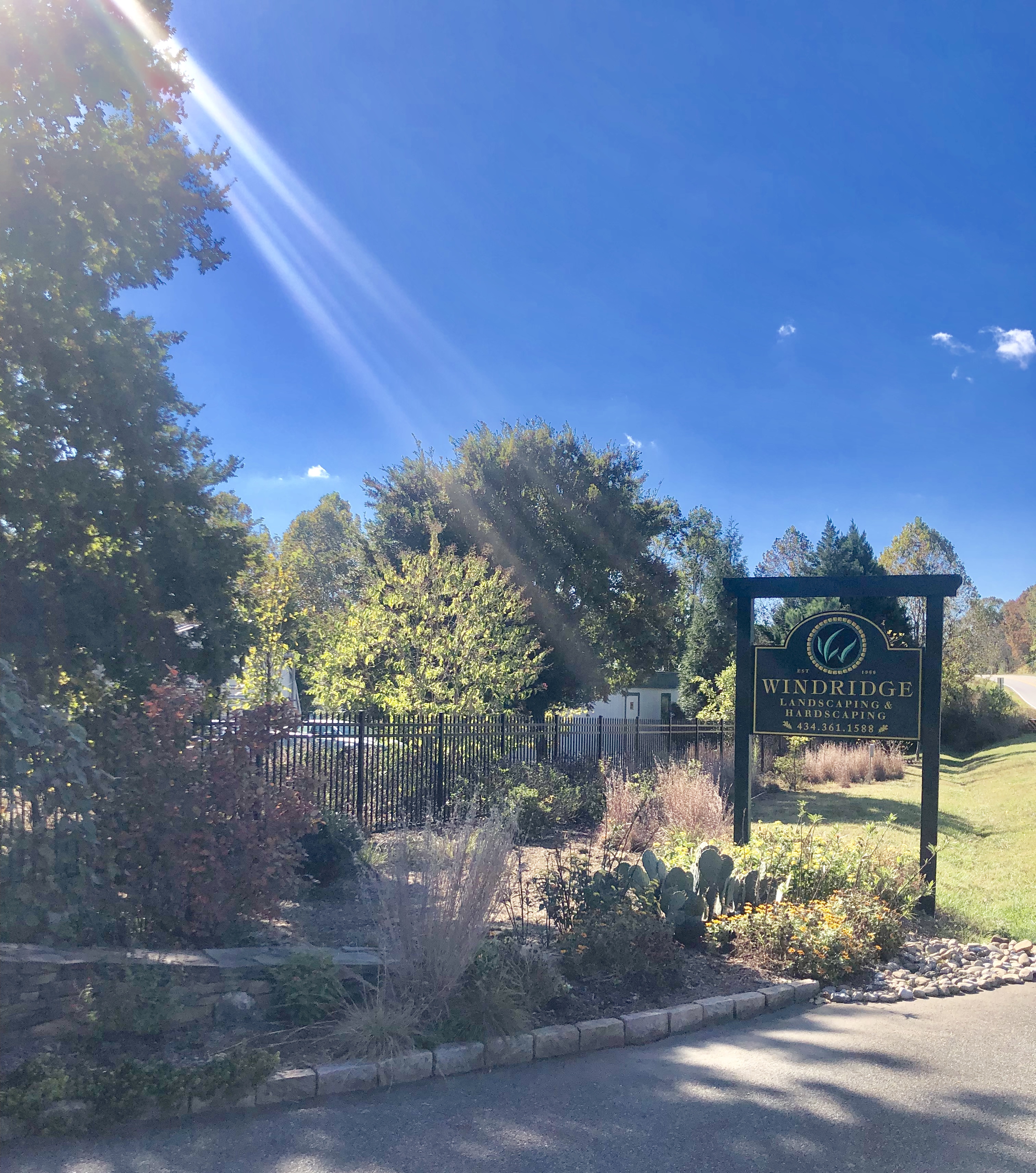
The summer show of annuals at the entrance of Windridge always outshines the winter one, as it does not quite have that 45 mph interest, but it in no way shape or form should it be dismissed. Magic is happening on a smaller scale and one only needs to take a stroll to the mailbox to experience it.

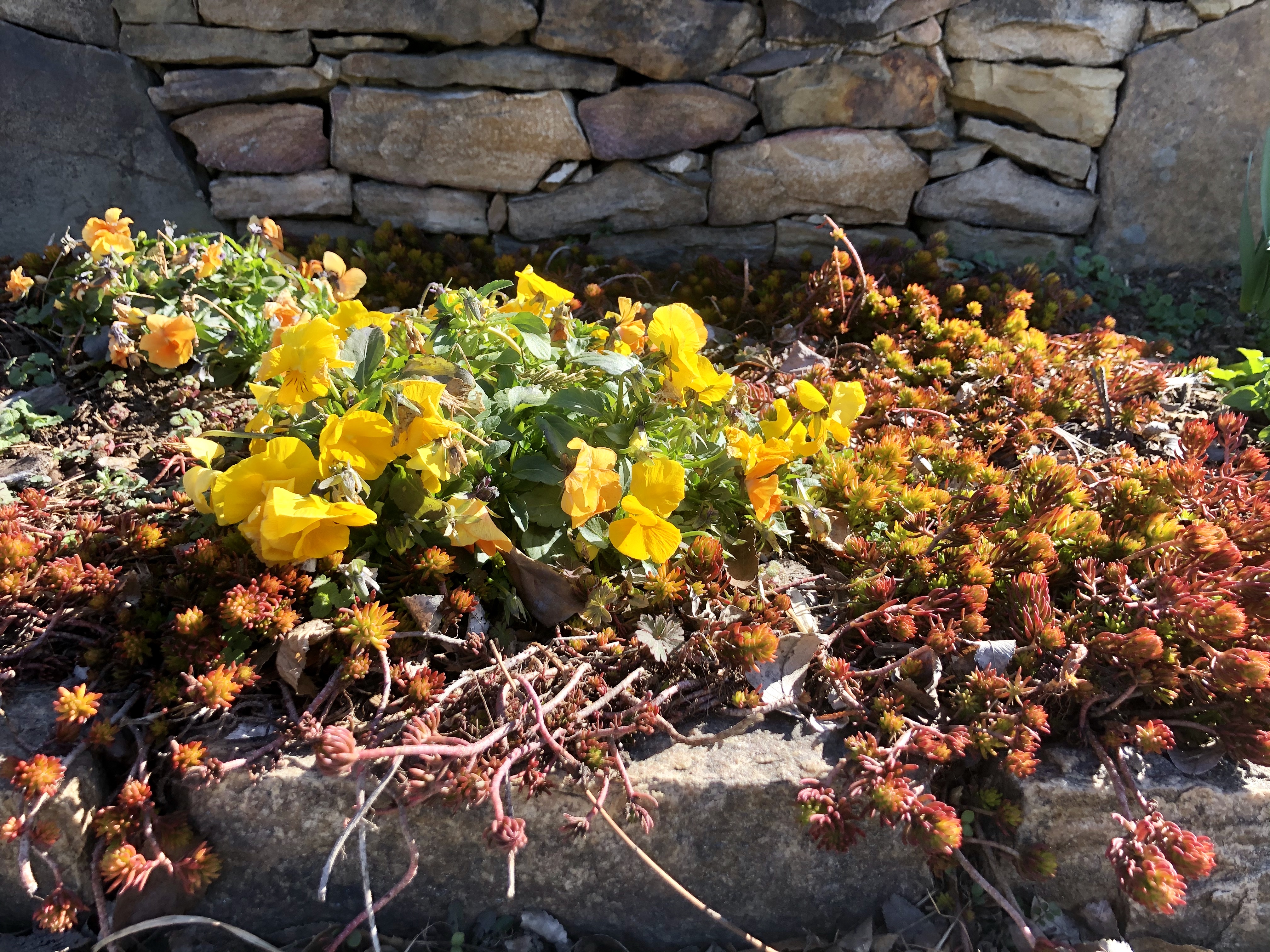
Above: The vibrant winter color of the Angelina Sedum makes the yellow violas pop and glow. Coolest part about the violas is that they will reseed themselves gently over time so you will have little bonus plants come up in the beds seasonally. We jokingly refer to them as our perennial annuals. Sedum can be easily propagated by literally breaking pieces off and sticking them on top of the soil (in the warmer months) where you want them to grow.

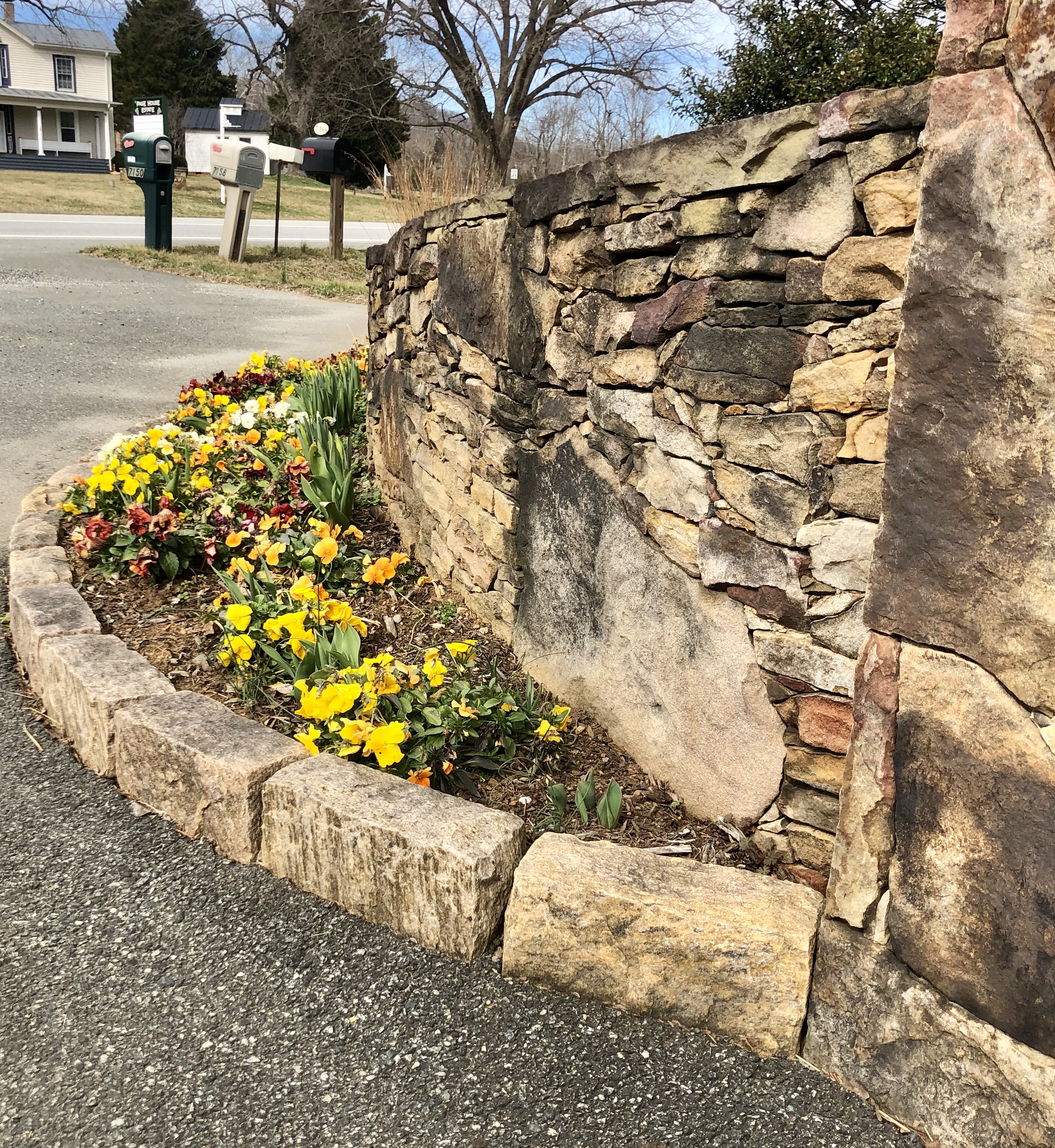
Below: The bulbs are pushing gently through the mulch bringing us the promise of spring. We were not kidding about the ‘stroll’ to the  mailbox either, see it in the background? Or were you too focused on the pretty flowers & beautiful stone walls with brown cobble edging?

Whether you need landscape renovation or just some fresh ideas we are here, at the ready, to help fulfill your horticultural wishes.

Trade Show Time

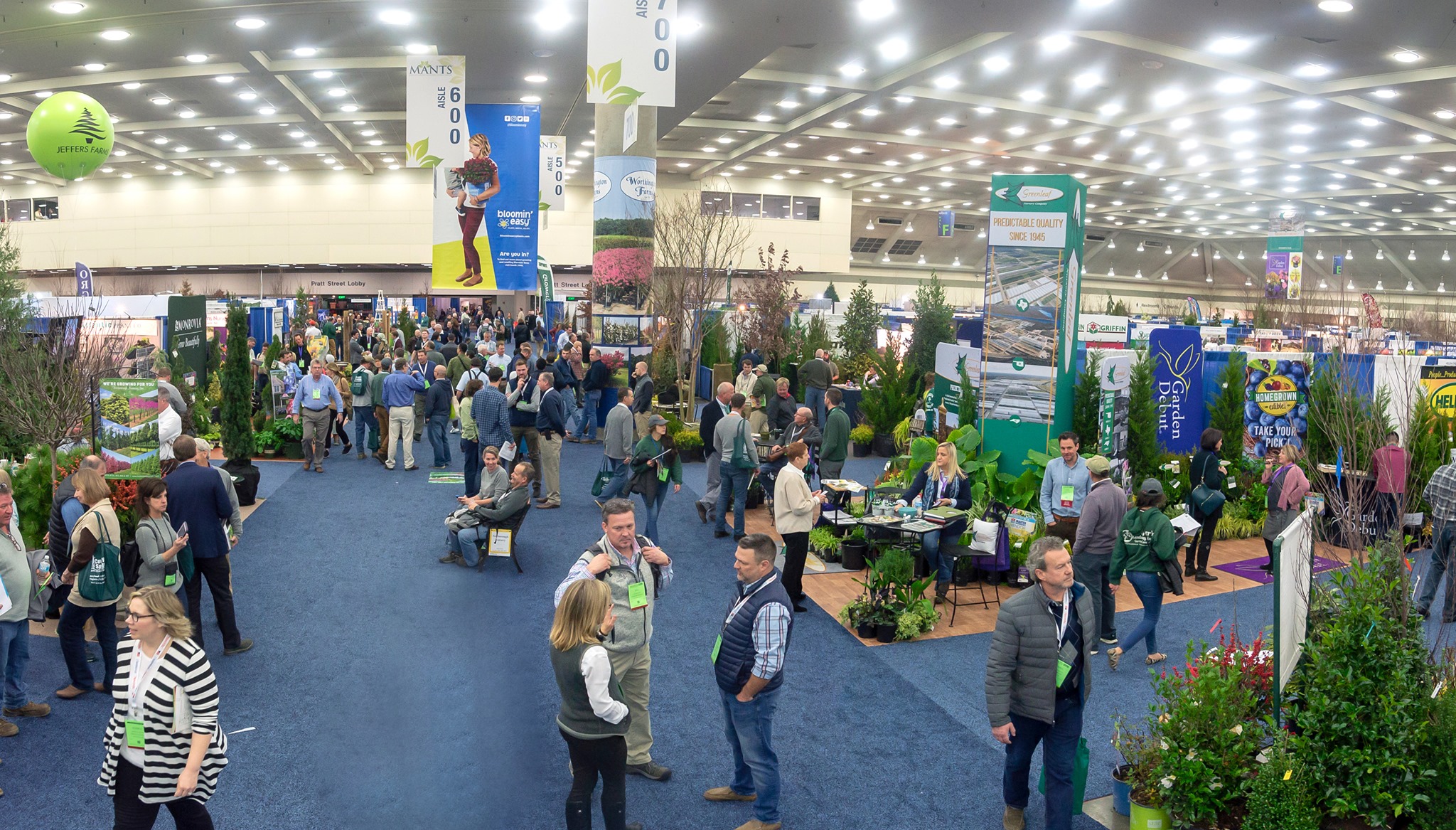
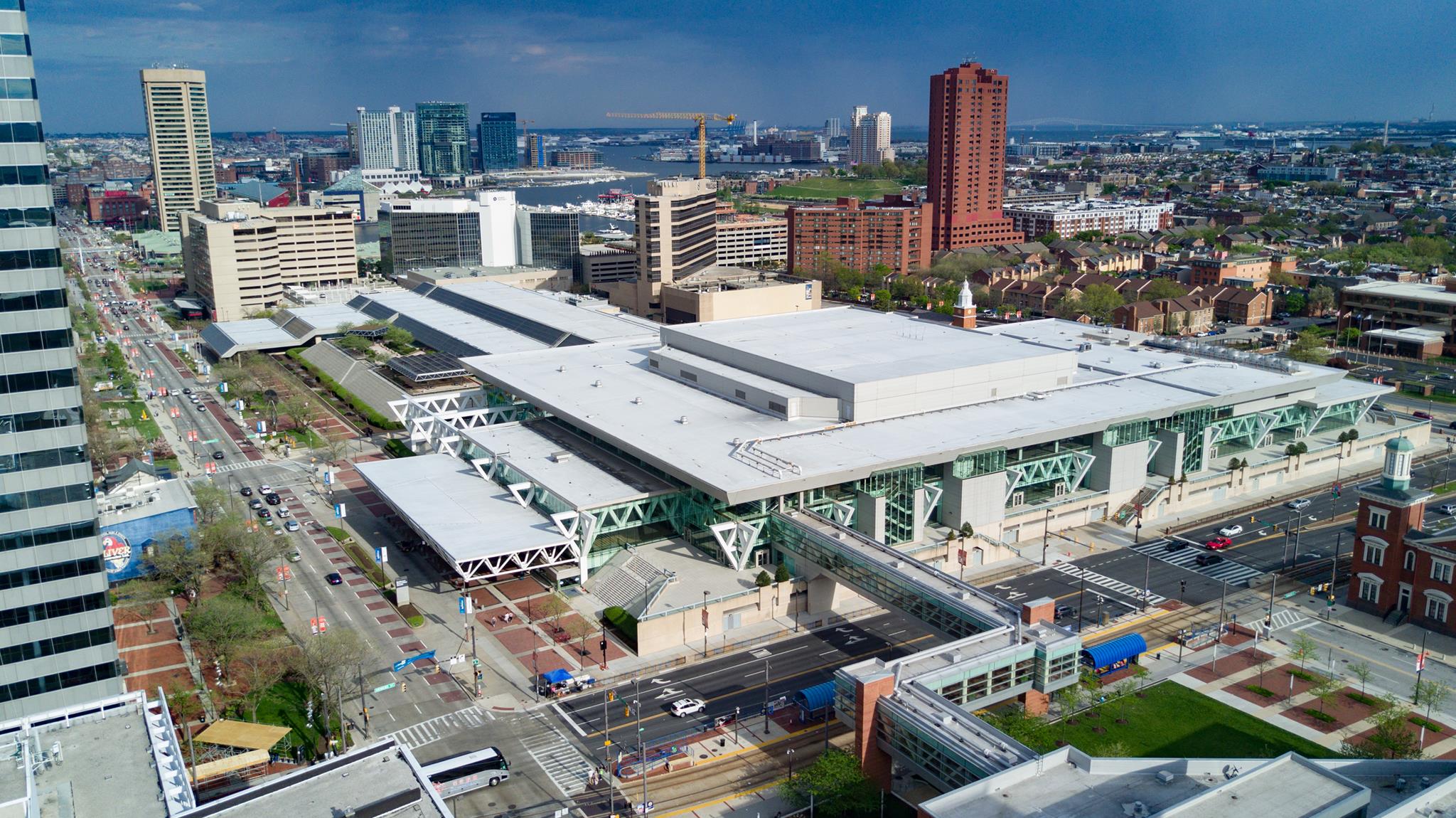
The decision was made to kick off the new year with a trip to Baltimore to attend the Mid-Atlantic Nursery Trade Show (MANTS). This year was a little extra special as the event was celebrating its 50th year, which is rather remarkable. Exhibitors & Attendees come from all over the world to participate in the biggest Nurseryman Trade Show on the East Coast. It is estimated that well over 11,000 people were in attendance. 

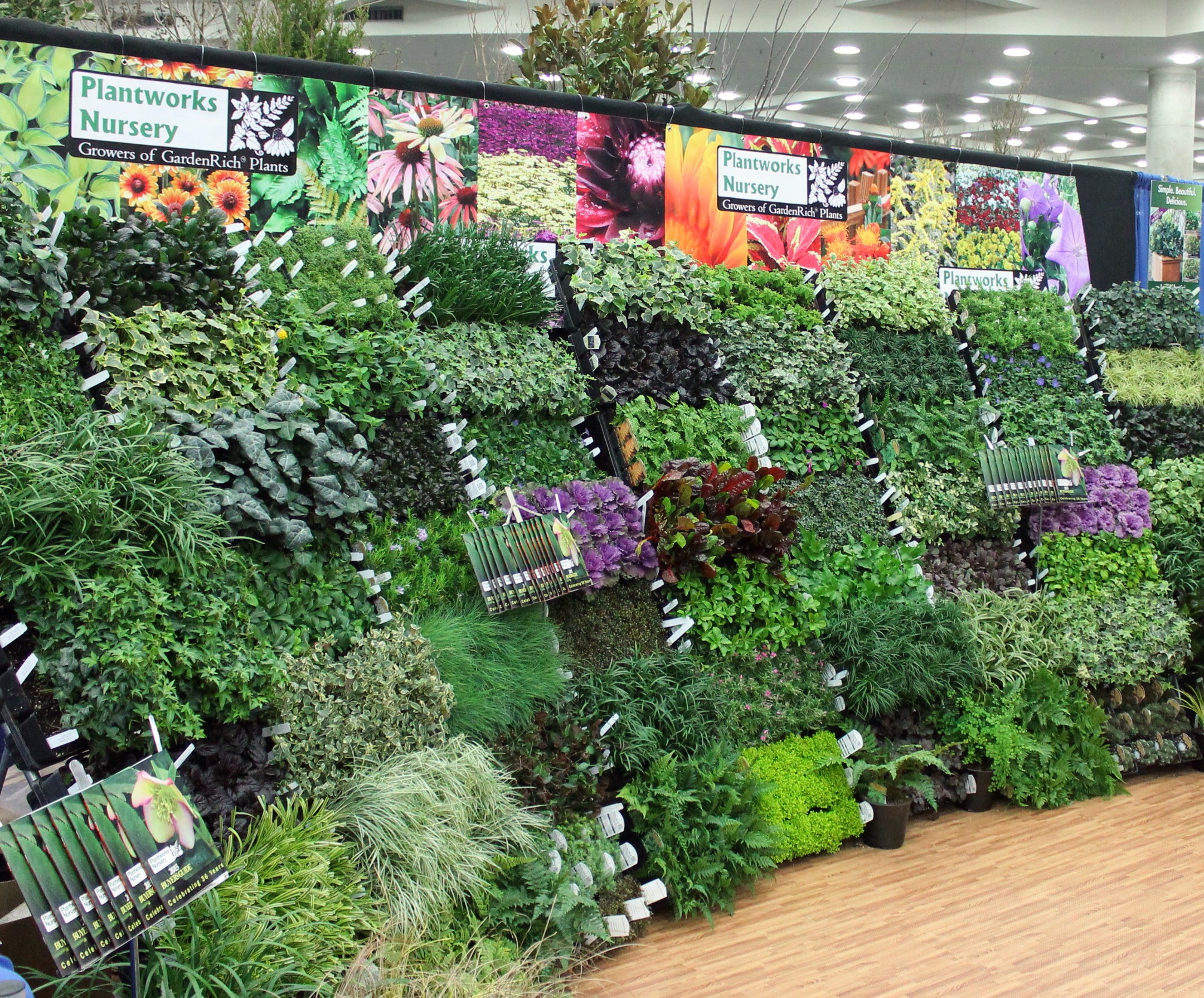
For two days we walked miles of the convention center floor to forge connections with new nurseries & to spend some time catching up with the remarkable ones we already work with. This is the only time that we get to see some of the people that we call & email in order to provide plants of unrivaled quality to our clients. There are lots of new ideas to be shared & networking opportunities to be had. We were also afforded the chance to see & discuss new hardscaping products & color blends up close and personal. The event truly is the ‘Masterpiece of Trade Shows’ and you do not have to attend as a professional to appreciate the rare and unique plants that the show has to offer.

The excitement continued at the Virginia Nursery & Landscape Association (VNLA) Breakfast where our very own Jeff Howe was elected to the Board of Directors. He accepted the position and is looking forward to serving as a representative for not only Windridge but for the Green Industry as well.

This was not our first trip to the show nor will it be our last. We returned energized with new ideas and are ready to tackle all the remarkable projects that 2020 has to offer.